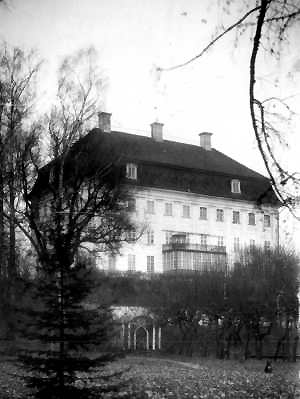
 30) (p.315) Conrad von Vietinghoff left his parent’s home but remained in the region at the University of Dorpat (Tartu), as his elder brothers had done. Today Tartu is situated in Estonia but in his time it was located in Livonia, the same Russian province as the Vietinghoff Manor of Salisburg.
 When Conrad finally left Livonia, he was 21 years old.
M.Y. characterized him as: He never had strong feelings for his family which he left in the midst of his adolescence crisis; in addition they had recently dissuaded him from his musical avocation. This does not correspond at all to the historic Conrad and his family's situation.
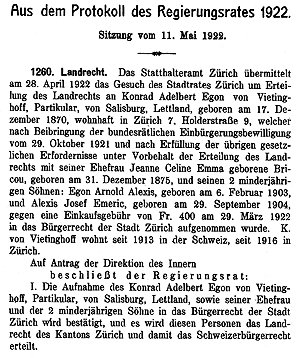 31) (p.316) Conrad only applied for Swiss citizenship for himself and his family in 1921 and they received citizenship in 1922. Once again we see how the novel’s chronicle deviates from historical chronology: according to the novel, the family possessed Swiss passports during WW I, i.e. within 2 or 3 years after they immigrated and even before the collapse of tsarist empire of which the family members were still officially subject. In addition, they never travelled to Scandinavia, even on their Swiss passports.
 32) (p.310) There is no information about a famous sponsor, a Swiss industrialist named Otto Weiner. Jeanne and Egon neither lived in Winterthur nor in Solothurn. However, in Winterthur originated the Reinhart family of which father Theodor and three of his sons, wealthy from industry and trade, were impressive sponsors of painters, writers and composers. For this part of the story, M.Y. seems to have borrowed some excerpts from the R. M. Rilke's biography for whom Werner Reinhart (1884-1951) bought a small castle above Sierre in the canton of Valais. This sponsor was also in contact with the avant-garde composers such as Stravinsky, Berg, Schoenberg, Hindemith, Honegger, and Webern who M. Yourcenar blended into "Egon von Reval's" biography. This fits to the musician's personality in the novel, but is not who Conrad von Vietinghoff really was.
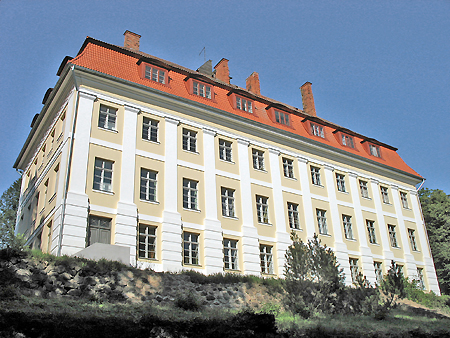
 33) Of course, the Salisburg manor with 62 rooms needed a staff of servants and a kitchen for a large family, long stay visitors and the servants themselves. In addition, there was a stable with horses for riding out, for working in the fields or woods, and for driving coaches. The enormous park with borders, paths, forest and river also needed caretakers.
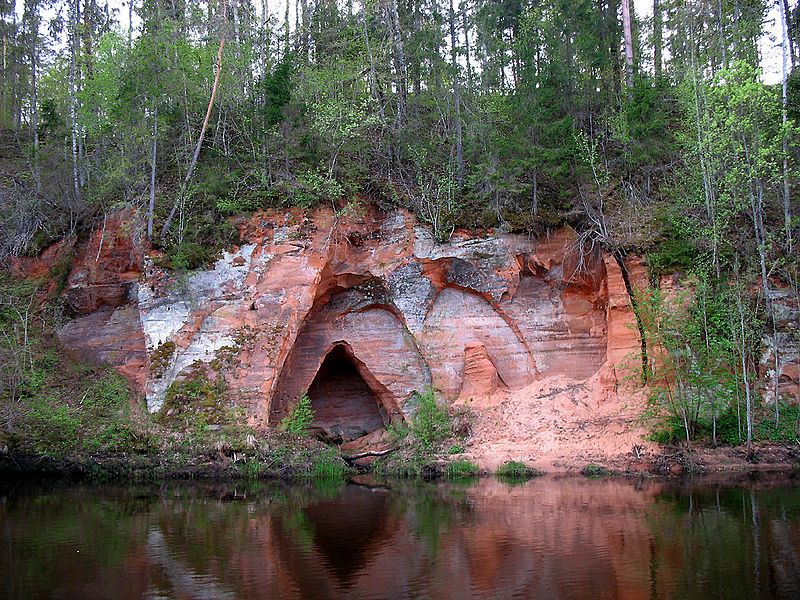
 Nowadays, this park is public and is a popular weekend destination. It offers a special habitat with a hiking trail along the banks of the Salis River. On the opposite side there are caves in the red sandstone and acoustics at a picnic site offer an extraordinary echo. For the public and paddlers, this park is the main tourist attraction of today's Mazsalaca.
 (p.328) However, there were neither pages in mansions in the Baltic regions nor announcements of the dinner with blaring trumpets. Perhaps this may have just been part of the ceremonies at courts of ruling princes. Yourcenar's description is somewhat stereotypical, like the staging of palaces in historic Hollywood productions.
 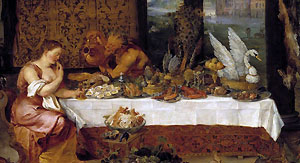 34) (p.286) Roasted swans are allegedly not tasty but were occasionally served to poorer people as a game substitute. Nevertheless, we know medieval recipes and today there still are enthusiastic swan dish lovers (however swans do not figure on any restaurant menus). The French fashion to decorate magnificent tables with prepared swans was perhaps only imitated on very special occasions, most likely at the court of the duke of Courland. In the manor houses of the German-Baltic aristocracy they were certainly not served as a traditional meal.
 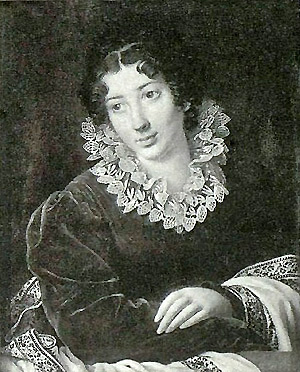 35) (p.329,329) A vague allusion to another member of the Vietinghoff family, a far relative of Conrad, is probably this: His grand-aunt, "Dorothea von Reval", first an ambassador … then an organizer of an illuminati circle which influenced princes and kings. He ("Egon de Reval”) remember having read a small book titled 'Thoughts' written by her in French during the years of the French Directory [1795-1799]. There are people who were granted glory, almost love and almost bliss. This seems to be an allusion to baroness Juliane von Kruedener, born baroness von Vietinghoff (1764-1824, see the beginning of this chapter) who wrote and published her novel Alexis ou l' Histoire d'un soldat russe (Alexis, Or the Story of a Russian soldier) in the years 1796 to 1798.
 However, she was not Conrad's grand-aunt but was descended from another Livonian branch of the family. She was the daughter of Baron Otto Hermann von Vietinghoff (see the beginning of the chapter about Conrad), who owned many manors, acted as a generous art sponsor, and was a counselor and quasi-health minister to the tsarina Catherine the Great. Therefore, he jokingly was called "Half-king of Livonia". His daughter Juliane was an adviser and confidant of the tsar Alexander I (whatever that means).
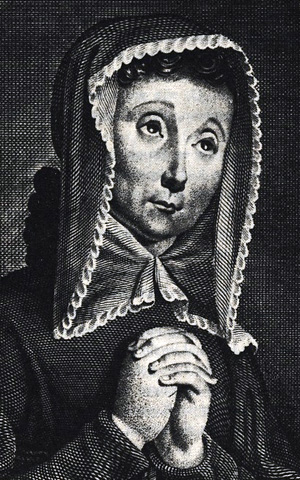 She was a Pietist Lutheran and a mystic who decisively influenced the tsar and is considered the Mother of the Holy Alliance of Russia, Austria and Prussia against France. In this position she represented Russia at the Congress of Vienna in 1815 and was stylized to appear as the Woman clothed with the sun from the Book of Revelation against the "Antichrist" Napoleon.
M.Y. may have also learned this from Egon von Vietinghoff but perhaps she discovered this eccentric baroness by herself which is suggested by the curious similarity of the title of Yourcenar's novel Alexis, or the Futile Struggle with that of the mentioned novel of Juliane von Kruedener.
She gave enthusiastic religious speeches in Aargau and Bale (Switzerland), and ran, at her own expense, soup kitchens for the poor people starving after the Napoleonic wars in Bale and in the region of Baden (Southern Germany) until she was expelled from both places due to her subversive activities.
In addition, she fell out of the tsar's favor due to an indiscretion, and died impoverished on the Crimea where the tsar had previously allowed the building of a Lutheran colony. Nevertheless, the movement of her Pietism had a decisive impact to the Lutheran church in Europe and in the U.S.A. We remember Yourcenar's words: granted glory, almost love and almost bliss.(p.328/329)
11 - General remarks and corrections
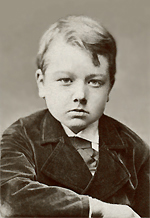 The sources of the following remarks are substantiated knowledge from personal discussions and documents. They refer to the differences between Conrad von Vietinghoff and the various figures that Marguerite Yourcenar literarily depicted in her novels.
These remarks also refer to her memories written in her last unfinished book as well as to the assertions, assumptions, hypothesizes and conclusions written by her biographers and then repeated by others.
We ask all previous, present and future authors and translators to correct the corresponding incorrect specifics in the biographies and academic discourses or to indicate thatv literary deviations from the historical facts are Marguerite Yourcenar's poetic license.
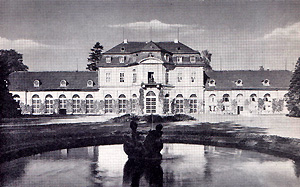 I. Conrad was the youngest of 4 brothers. On the division of their father's estate, the first inherited the property Neschwitz in Saxony, the second received the parent's home and property in Salisburg, and the third acquired Marienburg Castle and property in Livonia by marriage with a Vietinghoff from the lineage of the mentioned Otto Hermann. She was born a Vietinghoff and later the widow of another Vietinghoff, i.e. her name was three times Vietinghoff.
 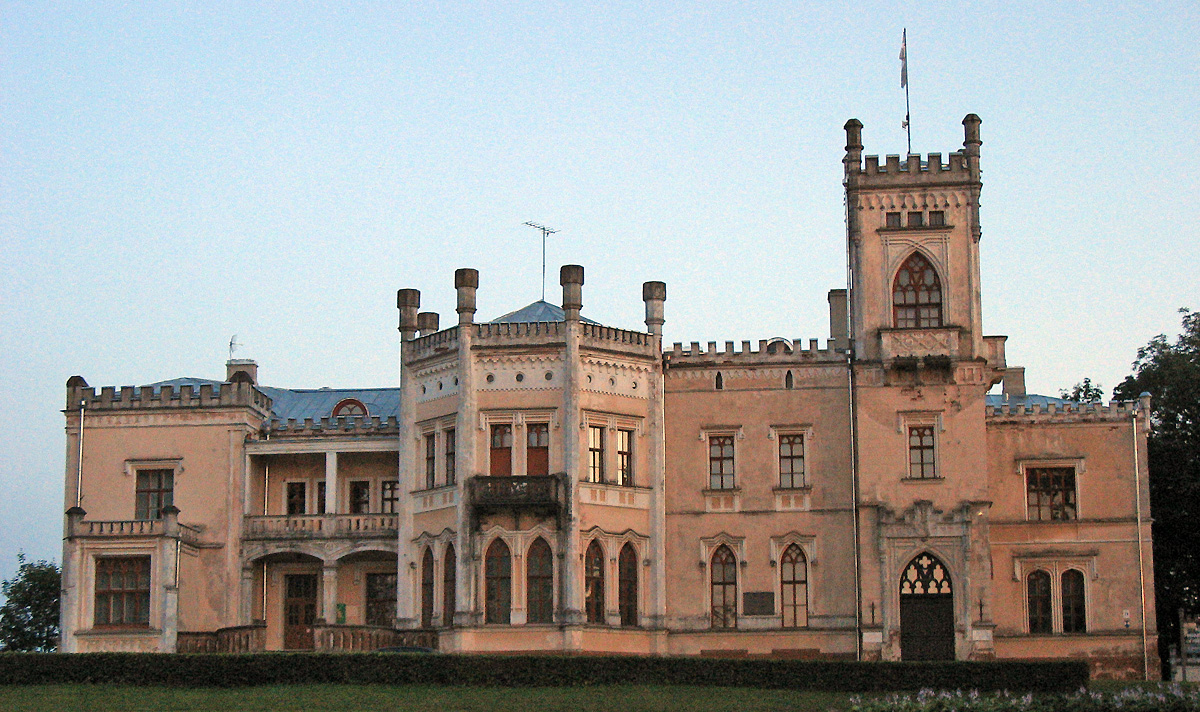 Conrad's heritage, however, was paid in cash. While his brothers lost their properties (including their childhood home), during the revolutions and wars, he was free of financial worries until the 1930's. For Conrad, the cliché of the impoverished nobility is only applicable in the time after the 1930s (i.e. his last 20 to 25 years, but not for the time when M.Y. wrote her novel "Alexis"). In the 19th century Conrad’s grandfather managed the largest property in Livonia (or one at least one of the largest). On the occasion of the farmer's freeing, his father handed over a part to farmers without land.
After Jeanne's death, Conrad lived alone and was be naive enough to generously give loans and guarantees to people who deceived him by complaining about their financial situation.
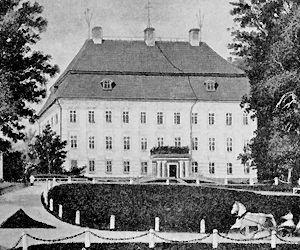 II. Conrad was born in the Salisburg Mansion; his homeland was not Bohemia, nor Moravia, nor Podolia, nor Poland and also not Courland but Livonia, first part of the State of the Teutonic Order and since tsar Peter the Great, a province of his empire (1710).
 The name is derived from its indigenous people, the Finnish Livs (in 2011 there remained only 250 people claimed to be ethnic Livs). In 1918/1919, in the Baltic region, the independent countries were first time founded.
The Northern third of Livonia was joined with Estonia while the larger Southern part was joined with Courland and this became Latvia. Therefore, the name Livonia disappeared from the map.
III. Conrad did not go to school in Pressburg (Bratislava) and did not study law in Dorpat (Tartu) but did study agriculture and economy there. Neither his parents nor himself ever lived in Vienna.
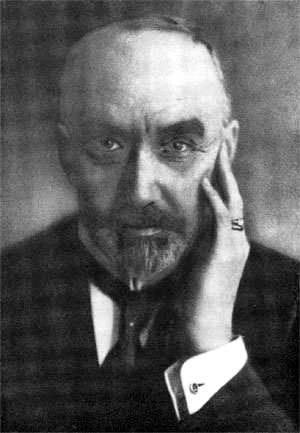
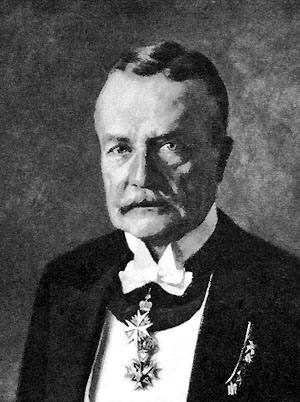 IV. After 1906, most probably Conrad never again saw his Baltic homeland, surely not after 1913/1914. He visited his parents when he was student in Leipzig and Berlin, later on the occasion of his engagement with Jeanne, as well as after their sons were born to introduce them to their grandparents. However, it is not completely impossible that he went to Livonia once more in the years from 1907 till 1913. His brothers maintained the relation to their father, who died in Riga in 1918.
 At least two of Conrad's nephews visited the ruined Salisburg Castle and the grave of his father (their grandfather). Later, Conrad's mother principally lived in the first son's (Harry) castle in Neschwitz (Saxony) until her death in 1923. While there, Conrad visited her several times.
 V. Not for one single day did Conrad participate in the anti-bolshevist revolution in his homeland. During WW I, he first lived in Geneva and then moved to Zürich in 1917. There he applied for the Swiss citizenship, which he and his family received in 1922.
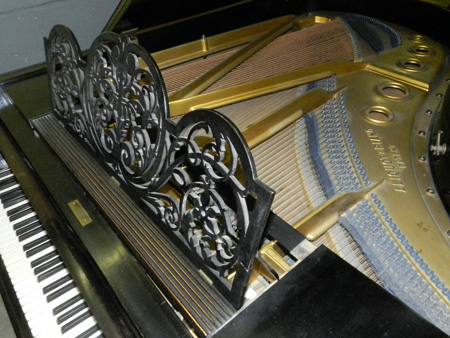
VI. Conrad was a pianist but not a composer; he never composed music neither was he a piano teacher. Nevertheless, once in a while he gave some private lessons, more from friendship than for payment.
VII. Conrad was open to contemporary music inasmuch as he particularly liked the compositions of Max Reger and other musicians of the late Romantic period such as A. Skrjabin, S. Rachmaninoff or R. Strauss. However, he was not an avant-gardist nor a lover of atonal music.
 VIII. The so called scandal in Rome is a literary echo of the problems which the author experienced with her companion Jerry Wilson and his boyfriend Daniel in India (see Michèle.Goslar). It has nothing to do with Conrad von Vietinghoff.
IX. Conrad did not enjoy a wide reputation; he performed only twice for charity, in 1910 together with a singer at Neuwied Castle (Germany) and in 1923 together with a cellist in Fribourg (Switzerland). Conrad did not follow a public career due to his extreme sensitivity not because of failures, as alleged by M. Yourcenar. He was too inhibited to play in front of a largely anonymous audience. Except for some private concerts for friends and acquaintances during his years in Wiesbaden and Zollikon, he mainly played for himself. He was much too shy and introverted for major solo performances in public.
X. There did not exist a financial inequality between Conrad and Jeanne, the parents of Egon, the painter. Jeanne was born into the upper class and he had enough fortune at his disposal to buy houses, to travel through Europe, to vacation with his family in grand hotels, educate his sons by private teachers or in boarding schools, and host members of the society on the occasion of literary or musical soirées.
XI. Perhaps during one or two years, Conrad and Jeanne did not live together for a certain time. This could have occurred when they moved from Paris to Wiesbaden and from there to Geneva or from Geneva to Zurich, when Jeanne established their new home and Conrad stayed at the old place or perhaps vice versa when Conrad was busy in German speaking cities locating a new house and hassling with the bureaucracy while Jeanne was caring for the children. They definitely bought the house on Böcklinstrasse in Zu
rich in 1918. They never completely separated and there is no hint of farewell letter. Jeanne spent the last period of her life in a medical sanatorium on the border of Lake Geneva with professional care due to her illness whereas Conrad probably remained in their common villa in Zurich – he himself was somewhat clueless about everyday affairs and was incapable of being of much help to her. Anyway, it is likely that Jeanne did not tell him the seriousness of her health status for long time.