 At an early age, Marguerite Yourcenar had already consciously toyed with such associations and growing her ambition to be named together with authors of great French literature. It is unknown whether she or André Gide have read an earlier book from 1796/98 with the title Alexis ou l'Histoire d'un soldat russe (Alexis, Or the Story of a Russian Soldier). A surprising coincidence (or perhaps not?) that it was written by the above mentioned baroness Barbara Juliana von Kruedener, born Vietinghoff (see also below).
Marguerite Yourcenar loved to play with and confuse the facts, and it is not always easy to see through this web of fiction, poetry and truth, which even her biographers occasionally are deceived by and therefore spread false information about the real Conrad von Vietinghoff.
Based on observations and traditions in the family, as well as evidence from Conrad and Egon's estate and their contemporaries, we see a picture of Conrad von Vietinghoff that differs from the character "Alexis" on several points. Yet, these two figures cannot be expected to be identical, as Alexis is a novel, not a biography. The characteristics which are not Conrad's are the creation of the author's free literary imagination, which was nourished by her feelings, sexuality and lifestyle. It is a writer's prerogative to withdraw behind the characters yet simultaneously integrate personal elements such as beliefs, sexual orientation and feelings into the characters.
One should not forget that Alexis was written in 1927/28 as her debut, and at the beginning of her career, she avoided making this novel a public declaration of her sexual preferences. Marguerite de Crayencour used the pseudonym Yourcenar, which she continued to use after her first success with Alexis. She hid herself not only behind a male character but behind a changed name, an almost perfect anagram. Nevertheless, at the same time she indirectly confessed her erotic orientation by writing in the first person, which she continued to do in the novel Hadrian's Memoirs.
In addition, she did not simply write sentimental literature but always knew to combine the singularity of her protagonists with general contemplations on life and the human existence.
In addition, she did not simply write sentimental literature but always knew to combine the singularity of her protagonists with general contemplations on life and the human existence.
 Justifiable doubts on the actual similarities between character "Alexis" and the true Conrad arise when "Alexis" suggests suicidal tendencies and moreover when he confesses – after living together for a long time – that the marriage with Monica was founded on a falsehood. This can not apply to the personalities and resultant relationship of historic Conrad and Jeanne that we know from the testimony of Jeanne’s friend Hélène Naville (see Jeanne's obituary): They confided in each other with utmost openness about all their sufferings, disillusionments, aspirations and thoughts on life and its purpose. This refers to the time when they got to know each other and developed mutual empathy: Conrad's empathy for Jeanne’s most painful experience with her Swedish fiancé and on the other hand Jeanne’s empathy for Conrad’s thwarted love aspirations. It is not a contradiction that they had for a modus vivendi compromising marriage with two children. Certainly, many mutual hopes at the beginning were not fulfilled and Conrad was not able to live beyond his nature.
In the novel "Conrad" also confesses to the payment of banal anonymous adventures. Based on all available knowledge on Conrad von Vietinghoff, at this point the behavior of the character "Alexis" is simply the fantasy of the author. Such desires and episodes are typical to Marguerite Yourcenar herself, flirting with such sexual forays even at a considerably advanced age, much older than Conrad was in 1927 and "Alexis" appears to be in the novel.
After a walk through the red-light district of Amsterdam at age 80, she noted: I love tenderly this women in the shop window … Again, I see the meaningful and naïve poster with the positions of love, the shadow plays and the sex shops with the huge phalluses. A young woman asks… 'Would the ladies and gentlemen like some small specialty?' Yet, our group is looking for a taxi as it begins to rain. If I were alone with …, I think, I would have tried this speciality to see where it leads. ... I have thought several times of that unknown woman ... who offered her sweetest thing to the first passer-bys. (Quoi? L'Eternité p. xxxxx)
And her friend, André Fraigneau, noticed decades before: She loved bars, alcohol and long conversations. She tried to seduce continually. As far as Conrad is concerned, there are no indications of such inclinations.
In addition to these obvious differences, the thoughts of "Alexis", such as I am honestly convinced I have never loved (p.xxx) or I, myself, am too mediocre to expect requited love (p.xxx), seem very strange to people who knew Conrad von Vietinghoff. There is further proof that Alexis' character was not based on biographical research; the author suggests that "Alexis" was an impoverished man, which was not the case for Conrad. It is true that Conrad and his brothers lost their homes but Conrad did not suffer any financial troubles as he still possessed his fortune at the time the novel was written. Yet, his situation would change over the following decades. In contrast, "Alexis" emphasizes his financial straits, increasing his feeling of guilt to his wife "Monika", which is a literary dramatization.
Despite this, Yourcenar succeeded in creating the aura of this cautious, noble and charming gentleman. Thus, we cannot claim the story is pure invention. The value of the literature, especially of Yourcenar's art, really lies in her general contemplation and her manipulation of the French language, rather than in the choice of the subject, the plot and the description of her characters. This is a philosophy of art shared with Egon von Vietinghoff; here, they are united and akin to each other. Marguerite used words as her medium, while Egon chose paints.
Despite this, Yourcenar succeeded in creating the aura of this cautious, noble and charming gentleman. Thus, we cannot claim the story is pure invention. The value of the literature, especially of Yourcenar's art, really lies in her general contemplation and her manipulation of the French language, rather than in the choice of the subject, the plot and the description of her characters. This is a philosophy of art shared with Egon von Vietinghoff; here, they are united and akin to each other. Marguerite used words as her medium, while Egon chose paints.
9 - Coup de Grace
 The short novel Le Coup de Grâce was written in 1938 and published one year later. The scene is the Baltic region shortly after World War I, during the Russian Civil War (1917-1923) between the "German Freikorps" (paramilitary free corps) and the "Red Guards" (paramilitary Bolsheviks).
The aristocratic backdrop of the Baltic region during the Russian Civil War, the unrequited love of the author for a homosexual man and the somewhat vague picture of Conrad von Vietinghoff and his family was the material around which Yourcenar built her characters and their stories. For her it was not necessary to closely follow the biographical facts of historical figures; rather write for her own awareness and inner development through the evolution of her creative writing.
What kind of movie the German film-maker, Volker Schlöndorff, produced based on this novella is another story which will not to be discussed here (however, Yourcenar was not happy with). In the movie from 1976, under the same title Fangschuss (Coup de Grace), well-known actors starred, such as Margarethe von Trotta, Mathias Habich and Mathieu Carrière. For its direction and camera work, the film received the highest endowed cultural award in Germany, the "Filmband in Gold".
 Surely the correspondence of the names "Conrad" and "Konrad" is not random, yet the family name of "von Reval" suggests historical and geographical plausibility but shows that there is a discrepancy from reality, as this name does not exist in German aristocracy. In a few passages, there are glimpses of the true Conrad, the painter's father, whereas other aspects and behavior are probably based on other lives or from Yourcenar's own experience. We may also see a mixture of all these with poetic license.
 Marguerite Yourcenar creates her story in Conrad's homeland and names a leading character "Konrad", whereas the actions in the novel have nothing in common with the historical Conrad and Jeanne. So, the fictitious figure Sophie who suffered the frustration of a woman in love with a homosexual man only has this in common with Jeanne von Vietinghoff and with the author herself. The character of Erich represents one of Yourcenar's lovers.
The storyteller, the Prussian officer Erich, and his men are quartered in the manor house of the friend of his youth, Konrad, whose sister, Sophie, falls in love with Erich. Yet, she cannot expect more than fraternal friendship as he has feelings for Konrad. All three are aristocrats, living in the manor which has already suffered several attacks, and share a common destiny of a threatened society whose structure is dissolving. Sophie tries to distract herself with superficial affairs in order to make Erich jealous. In the confused final stages of the psychologically and socially hopeless situation, wearied of the repeated rejections and ultimate humiliations from Erich, she leaves her house. Sophie follows a student, turning from her social background, and joins the Bolsheviks. Later her small group is encircled by Erich's troops and is captured. Her brother, Konrad, had been killed in an earlier fight. The conflict reaches a stage where no prisoners are taken anymore. There are no exceptions, even for Sophie, and her last wish to receive the coup de grace by Erich himself is fulfilled.
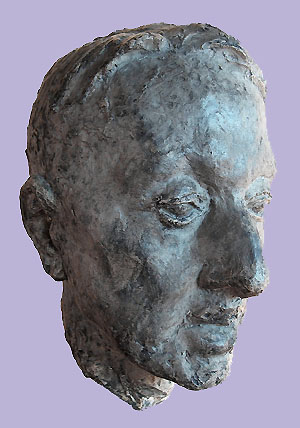 To speak of an erotic triangle seems inappropriate, as between Erich and Sophie there is no actual consummation and Erich's affection for Konrad is only subtly suggested. It remains unclear if Konrad shares Erich's feelings. The discreet intimacy of these two men reflects the true attitude and idealism of the real Conrad. It is as if the author's respect prevented her from analytically dissecting these noble feelings. The brief suggestions, which the reader can almost overlook, are distant antecedents to the theme of Sophie's unfulfilled love, which is the main subject as seen from a female angle and takes the forefront with a much clearer descriptive language as in Alexis. Inasmuch as the parallel between the novel's characters and the Vietinghoff couple exists, not on the biographical level but in the fragile balanced equilibrium of three individuals. In the atmosphere of subtle reflections and unspoken feelings and the abstract essence of human tragedy, this novel can be seen as a "completion" of "Alexis".
Yourcenar used her favored tactic of systematically muddling the facts. In doing so, her characters are separated from the historic Vietinghoffs and this "misleads" the reader, consequently diverting them from her own problematic relationships. Psychologically, the brutal ending to the novel may be considered a personal outcry from the author herself.
In the epilogue, she claims The book is inspired by a verified [inclusive] narrative, and the three figures, …, remained more or less as they were described to me by one of the protagonist's best friend. (Oeuvres romanesques p.79). M.Y. suggests the truth of this sentence and of the whole novel by writing this statement next to the differentiated analysis and its sober commentaries, which are psychologically astute and almost scientific. Later she wrote This young man and this young woman who I knew only from a short summary of their history…. (Oeuvres Romanesque p.80). The mentioned one of the protagonist's best friends could even be her father with whom she was very familiar and who had told her of the couple, Jeanne and Conrad. But how much?
10 - Quoi? L'Eternité
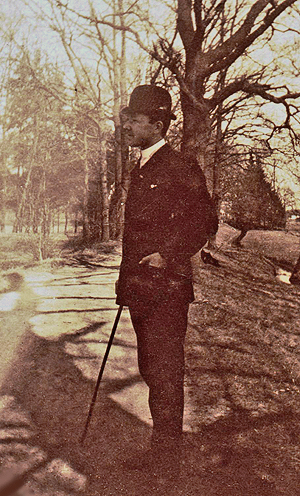 Actually, there is no English translation available. The title's literal translation: What? The Eternity
Egon, with his brother and his parents appear in Yourcenar's last tome of her family history trilogy, in Quoi? L'Eternité - where their names are changed, even exchanged, except for Jeanne. The abundance of verifiable details and the plausibility of the descriptions should not be misunderstood. The stories should be read as literature and not as true autobiography. This tome contains only as much real facts as the author required for background.
Her work may answer some questions; lifelong questions which accompany the author since the death of her mother. They are variations of her existential leitmotiv, perhaps a haunting nuisance. M. Yourcenar did not write a documentary but an autobiographically inspired novel set in the appropriate time and place.
Like all of Yourcenar's books, this novel is also instructive and fascinating; it is the last (unfinished) volume of the trilogy The Labyrinth of the World. It is peppered with realistic and historically verifiable episodes and full of wisdom of the Grand Dame in succinct language and refined formulations. The usual attribute of this work as "autobiographic" is only accurate for issues about her own family. Her memories from early childhood sound authentic as well although she completes some normal gaps in her memory in such a way that the story continues sensibly.
The author did not hold to the facts either due to a lack of memories or for literary intention. Josyane Savigneau subtitled her Yourcenar biography aptly and not just by chance The Invention of Life. It would be ok to qualify all of Yourcenar's important books as novels. However, if a work like Quoi? L'Eternité is called a chronicle with an autobiographical character, then the reader's attention is inevitably focused on true facts. As far as the Vietinghoffs are concerned, this book is much more a production of the author's fantasy than the reader and even the biographers would expect.
Yourcenar's inclination is to create literature and engage the novel's figure in her own themes - as writers often do. Yourcenar herself wrote: ....
Yourcenar's inclination is to create literature and engage the novel's figure in her own themes - as writers often do. Yourcenar herself wrote: ....
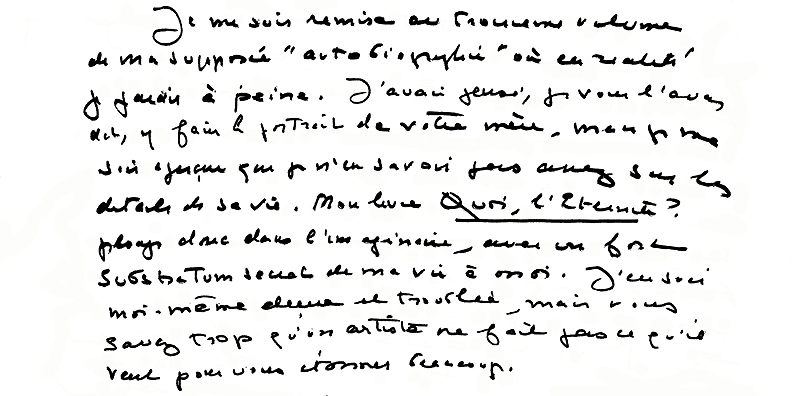 In a letter from July 6, 1986, addressed to Egon von Vietinghoff, the writer mentions the work on this book. The word "autobiography" is set in quotation marks. I started again to work on my so called 'autobiography' where I actually almost do not appear. As I already told to you, there I intend to create a portrait of your mother but I realized I did not know enough details of her life. Thus, my book 'Quoi, l'Eternité?' dives into the imaginary world with a definite basis from my own life. I myself am disappointed and confused about that, but you know all too well that an artist not does do what he wants – to surprise you very much. (means: that should not surprise you very much).
  In Quoi? L'Eternité M. Yourcenar expressly confesses: However, all this could not be as well … Long time I thought that … I was mistaken … This remarkable time gap proves to what degree our memory increases or decreases the interval of events, in other situations it embellishes or shrinks the facts, and even transforms them in order to keep them alive.
 The memory is not a collection of well ordered documents kept in safe storage somewhere deep within us; it lives and changes; bringing the pieces of old wood together to ignite them again. In a book consisting of memories this truism should to be expressed somewhere. Here it is done. (p. 278,279)
Earlier she recognized: The memory always knows too much or not enough. (p.156) In the chapter A pellet of frankincense she wrote: I try to recall Jeanne's life … joining together some memories from those years which were conveyed to me. My main source was Michel [her father] who … certainly did not know some minor facts concerning her [Jeanne] but Fernande [his wife] would know. … Finally, some facts directly came from 'Madame de Reval' at the unique occasion I as an adult could talk to her – if someone of 20 can be considered an adult.
Beyond a doubt it will occur that I have to fill an empty place or to emphasize a characteristic by borrowing details from another person who has at least a similar outline with Jeanne … or whose circumstances are roughly analogous and therefore give authenticity to Jeanne's life. In addition, this procedure is only acceptable under the condition to choose from a large pool of people who individually belong to the same blood group or to the same lineage of souls. One has to darn the holes of the tapestry or to join together the fragments of a broken glass. (p.80,81)
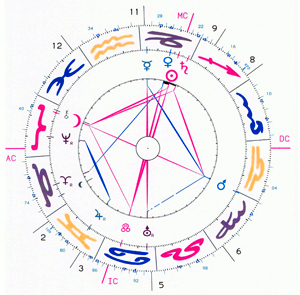 Conrad von Vietinghoff was not born in the sign of the enterprising, or even a daring, Aries as the author suggests. For the Gregorian calendar in 1870, he was born on December 29 under the sign of the controlled and inhibited Capricorn. Suppose he was born after 3:10 a.m., then only the moon would be in Aries but should M.Y. really have calculated this? However, the quality of Capricorn sun sign is noticeable dominant, due to the presence of Mercury, Venus and Saturn in this sign. This puts four of the ten classic factors of a birth chart in one sign, which makes an essential difference to the description as an Aries born personality. The novel figure of the hesitant "Alexis" matches the true Conrad much better than the energetic husband of "Jeanne of Reval" in Quoi? L’Eternité. As an epistolary novel without action Alexis is written in the movement of a "Largo", whereas the last volume of Yourcenar's trilogy The Labyrinth of the World needs a movement in the sense of a “Vivace” with occasionally expressed "fortissimo" passages. By this analogy, we direct your attention to the style of Yourcenar's composing, in which she creates at her discretion instead of working on facts.
Perhaps, this could be dismissed as pure assertion if there were not concrete facts that would prove most of the character "Egon von Reval" – including his personality and his activities – to be pure fiction. Therefore, the historical Conrad von Vietinghoff, certainly did not suffered to be excluded from the great adventure of the century, not from the war which always horrified both of them, but excluded from the risk and from the privileges of danger, from the solidarity and sometimes brotherhood of men, and from the male world of human relations. (p 316). On the contrary, he was happy to stay with his wife and his sons in the neutral and protective Switzerland and to have escaped from the horrors of the war; in addition he could refine his virtuosity in peace and devote himself to literature.
Please note:
This is not about literary criticism of the important writer, it is about presenting the facts from the point of view of the Vietinghoffs to enable the reader, the commentators and the biographers to more easily distinguish literature from truth rather than to take all-the-novel-like embroidery at face value.
On the cover of the French edition of Quoi? L'Eternité we read:
It was a complete chaos from which Marguerite Yourcenar created her own universe.
This is not about literary criticism of the important writer, it is about presenting the facts from the point of view of the Vietinghoffs to enable the reader, the commentators and the biographers to more easily distinguish literature from truth rather than to take all-the-novel-like embroidery at face value.
On the cover of the French edition of Quoi? L'Eternité we read:
It was a complete chaos from which Marguerite Yourcenar created her own universe.
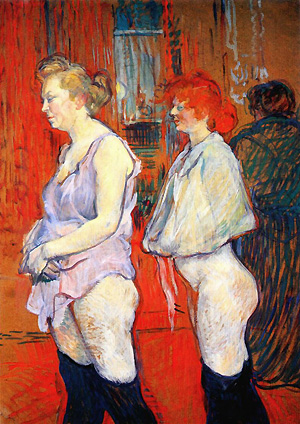
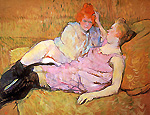 In particular, it is conspicuous how many times the subjects in this book include promiscuity, prostitution, brothels, whores, certain gardens, sleazy bars, obsessive behavior, erotic adventures, love triangles, extramarital sex and secretive encounters. Also included are cute, dishonest, drug addicted or semi-criminal gay men; with implied lesbian experiences and some lascivious relatives.
Occasionally, Yourcenar’s inclination towards these aspects of life describes establishments in her work similar to the colorful and frivolous world depicted by the painter Henri de Toulouse-Lautrec. This seems quite strange in the context of Jeanne and Conrad.
Remarks and corrections about Quoi? L'Eternité
 1) Conrad was the youngest of four sons. The first inherited the property of Neschwitz in Saxony, the second received the parents' home, Salisburg, and the third acquired a castle in present day Latvia from his marriage to a lady whose family name was Vietinghoff as well and who had previously been widowed by another member of the extended Vietinghoff family (so she was named Vietinghoff three times!).
Instead of property, Conrad inherited money. While his brothers lost their properties, including his childhood home, during revolutions and wars, he did not suffer any financial loss till around 1930. The cliché of the impoverished nobility is only applicable in the time after the 1930s, when Conrad would live alone and would be naive enough to generously give loans and guarantees to people who deceived him by complaining about their financial situation.
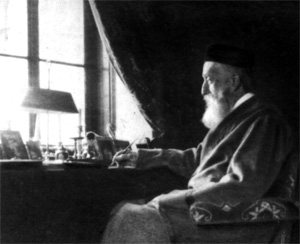 2) He was born at the manor house Salisburg. His home was not in Bohemia, Moravia, or Courland but in Livonia, which in 1710 was made a province of the Russian Empire by Tsar Peter the Great.
 Livonia was named after the Finnic Livs, the original inhabitants (today still a very small minority), and for centuries was ruled by different countries. At the founding of the first independent republics of Latvia and Estonia in 1918, Livonia was divided. Thus the southern part forms part of Latvia and the northern part belongs to Estonia. Consequently, the name Livonia disappeared from the map.
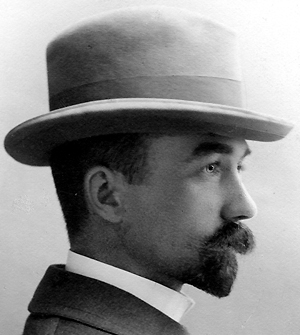 3) At the university in Dorpat (today Tartu in Estonia), he did not study law but agriculture and economy.
 4) He definitely never again saw his Baltic homeland after 1913, probably not after 1906. He visited his parents as a student in Leipzig and Berlin, then again at the occasion of his engagement with Jeanne, and each time after the birth of his two sons in order to introduce them to his parents. Perhaps alone he visited them once more.
His brothers kept in touch with their father till he died in 1918. At least two of Conrad's nephews visited the empty manor house Salisburg and his father's grave in Riga. His mother lived until her demise in 1923, mainly at his eldest brother’s home, castle Neschwitz in Saxony, where he went to see her several times.