6 - Homo...
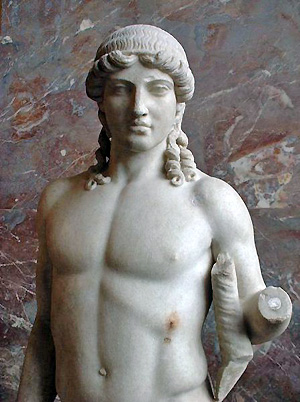 We should definitely consider that to speak about sex was generally taboo in Conrad's time and still is today in so many countries. Even the term "homosexual" was created only in 1868 and was still uncommon in everyday speech – Conrad never spoke it aloud.
 "Homo" ("same") is from Greek, which Conrad studied as he greatly appreciated the Greek culture. Yet "sexus" ("gender") is from Latin, so the term "homo-sexual" is a linguistic cross which is taken for granted in our societies nowadays but in former times, it belonged to a scientific vocabulary of theoreticians. Later, Marguerite Yourcenar said it is too medical. Conrad would never have used this term or any other popular expressions for the same phenomenon. Even in a letter to one of his closest friends, he wrote "H.S." as a discreet abbreviation.
He spoke about "homotropy" ("inclining to the same") or "homophilia" ("love of the same"), terms almost forgotten today which do not emphasize sex but eroticism and love. They are pure Greek words and lead the attention to a general and more subtle aspect than sex. Conrad could not reconcile verbal reductions such as "make love" with his idealistic view on the world and romantic ideas.
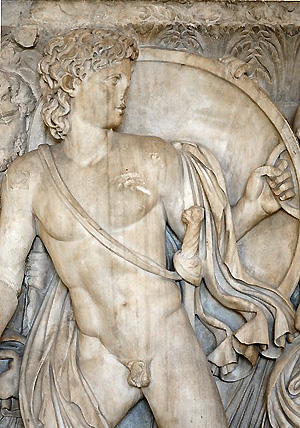 It is hard to imagine that in the first half of Conrad's life people needed a swimming dress covering all the body, except the forearms and feet – and when he was in his youth, public pools were strictly separated for men and women. Anything else was regarded as indecent or immoral and deviations from these seemingly ridiculous regulations were punishable by fine or even arrest. At that time, there was, of course, no open gay life as there exists nowadays (yet not in all countries). When the extravagant Oscar Wilde, after a scandalous trial, was sentenced to two years in prison and forced labor due to his friendship with a younger aristocrat, sixteen years his junior, Conrad was 24 years old. The story threw the world press into turmoil. Also, the drama of the relation between Paul Verlaine and Arthur Rimbaud, two French writers, in the 1870s, was not yet forgotten.
 As still today, the sensitive minority deplored the dominant brutality in the world, which during Conrad's lifetime was manifested mainly in the Russian Revolutions, the Russian-Japanese War, the Civil Wars in Russia, China and Spain, in two World Wars, the Holocaust, the Korean War, and the Stalinist Regime. At least 120 million people died over the course of all these wars and dictatorships. Personally, Conrad lost his home due to the brutal Russian Revolutions.
He was an idealist, humanist, pacifist, vegetarian, and an opponent to animal testing.
We cannot say how much, how often and on which occasions, Conrad could live his sentiments. Yet, according to his most intimate friend of his last thirty years, we can say, that he possibly never sexually followed his sentiments – in a similar manner to his contemporary Thomas Mann (1875-1955). In the circle of like-minded friends, he discussed and exchanged letters going into raptures about the old Greek ideal of "kalokagathia" (to be good/virtuous and beautiful at the same time), about the difference between "Eros" and "Agape" (erotic-emotional and Platonic-selfless love), about the divine aspect of love, and about the expression of J. J. Winckelmann "Edle Einfalt – stille Größe", what means "noble innocence and serene grandeur".
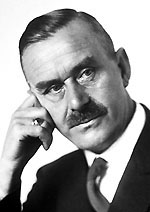
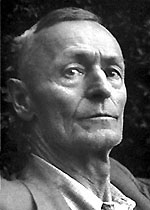 Conrad and his friends read Plato, naturally in the original Greek, and the poems of Paul Verlaine (1844-1896) and Arthur Rimbaud (1854-1891) in French.
As insiders, they sympathetically understood the German novellas of Ernst Wiechert (1887-1950) as well as the poems of August von Platen (1796-1835) and Stefan George (1868-1933) with his homage to the male youth.
They attentively followed the publications of Hans Blüher (1888-1955) who commented on love between men in a uniquely open way.
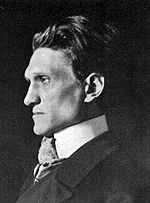
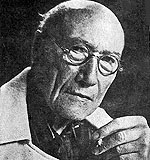 Also, Conrad and his friends specifically looked at the great success of the homosexual writers Marcel Proust (Legion of Honour 1920), Thomas Mann (Nobel laureate in Literature 1929) and André Gide (Nobel laureate in Literature 1947), and those with homoerotic aspects in their literature such as Hermann Hesse (Nobel laureate in Literature 1946).
Even though they were not all his favored authors, it would have brought definite satisfaction to Conrad that people with homoerotic feelings were internationally honored – in defiance of the common preconceptions of homosexuality.
Yet at that time, all individuals affected by this fateful issue, besides some very extroverted ones, lived most inconspicuously or in total withdrawal, and often would transform their vital energy into art. The authors Marcel Proust (1871-1922) and Thomas Mann (1875-1955) are prominent examples. It is no wonder that the individuals of this great minority had to rely on the inspiration of bisexual or gay public figures and clandestine empathy of friends – as it partly remains nowadays, depending on the society and the law where one lives.
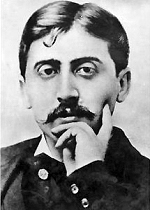 Though he felt a kinship with these writers and fellow-sufferers, Friedrich Hölderlin (1770-1843) and Conrad's contemporary Rainer Maria Rilke (1875-1926) remained close to his heart as well, due to their similarly highly sensitive natures.
 His circle commented on political developments and exchanged their ideas on the old Greek dramas, Dante and the great classics of German literature. Otherwise, they had a critical look at the contemporary writers, such as Hermann Hesse (1977-1962), or became absorbed with Fyodor Dostoyevsky (1821-1881) and Friedrich Nietzsche (1844-1900), whose sister had been in contact with Conrad. Later the discussion shifted to other important contemporary figures, such as C. G. Jung (1875-1961) and Reverend Martin Niemöller (1892-1984).
Conrad von Vietinghoff sublimated his subject of life in reading adequate literature and the Bible, in discussions and correspondence with a few friends – and of course as many other sensitive people – in his art of music. His wife, Jeanne, assimilated her profound questions and tragic life topics through inner schooling and writing books. Marguerite Yourcenar did it in her way in her own work.
Dates are given to show that most of these prominent figures were contemporaries of Conrad and to emphasize how current the debates on their works were at that time.
Dates are given to show that most of these prominent figures were contemporaries of Conrad and to emphasize how current the debates on their works were at that time.
7 - Conrad as a source of inspiration for the novels of Marguerite Yourcenar
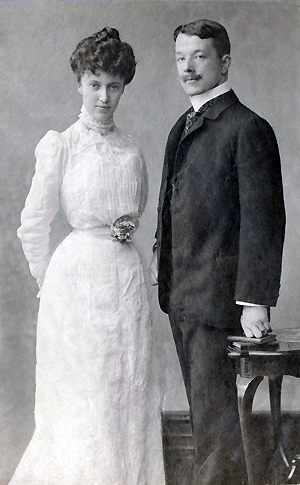 The writer, Marguerite Yourcenar, barely knew Conrad. She may have met him some four times: surely at the age of two, probably once more at age three and possibly another time some years later, perhaps as a teenager. It is almost certain that she, as a young lady of age 24, met him again in Zurich or in Zollikon when he was widower for a year. Before that she made a "pilgrimage" to Jeanne's grave on Lake Geneva. Immediately after her encounter with Conrad, while still in Zurich, she began her first real work, the novel (or novella) Alexis.
Conrad's exceptional but extremely introverted personality was overshadowed by the unique radiation of his wife Jeanne. It is no wonder that Jeanne took a special place in Marguerite Yourcenar's world, as she was the best friend of her absent mother, who died shortly after her birth.
Jeanne was THE stimulus of inspiration for Marguerite Yourcenar. First of all, Jeanne was a woman and a writer. Apart from that, she was spiritual, of strong character, superior, and beautiful. Therefore, with some foresight into her own life, she was THE logical role model for Marguerite. Yet, Jeanne was a model for all.
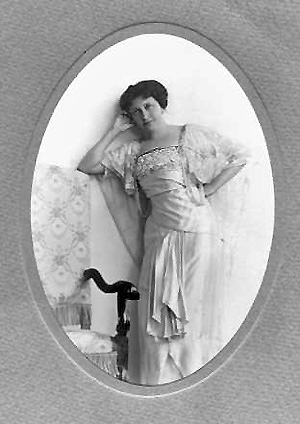 Her sympathy, psychological curiosity, self-reflection and erotic fantasies could not avoid circling around Conrad. It was him who was nearest to the most beautiful, strong and desirable woman and mother. He was the one with whom Jeanne had had intimate exchanges and had shared her life over a minimum of 26 years – with whatever agreements, exceptions and limits.
 Jeanne was more influential in Yourcenar's life. However, similar to musical compositions, there was a second equally important leitmotif. Namely Conrad’s world and his inclinations became another inspiration for her novel characters. On the one hand this was a topic independent from her idol Jeanne, but on the other hand Conrad's homosexual longings were also Yourcenar’s issue.
The fact that even the husband of the most admired woman (by M.Y.) was a like-minded person made the husband (after Jeanne) the second role model in her literary work. However, it is unlikely that Conrad ever knew about Yourcenar's orientation.
Conrad was only tremendously expressive in his art when playing the piano. In the outside world, Conrad stood in the shadow of his splendid partner, but this shadow attracted Marguerite Yourcenar in the same magical way.
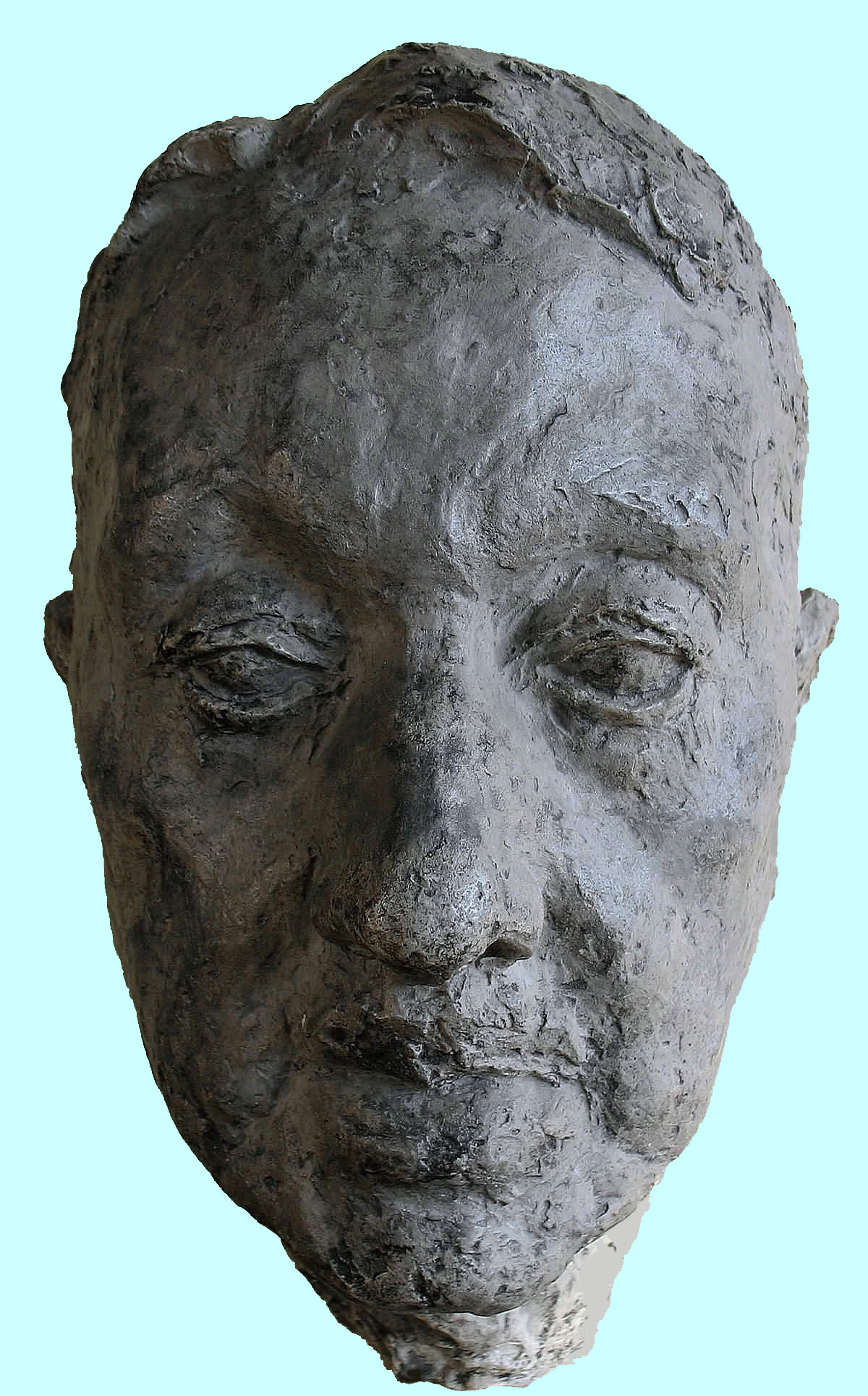 Yourcenar was unable to focus only on one person. It is true the one, Jeanne, was dominant, matchless and her exemplary nature was in agreement with society. Yet the second one, Conrad, was withdrawn and therefore more mysterious. Somehow, he was more near to Marguerite Yourcenar due to common wishes and struggles.
Thus, her desires, contradictions, love affairs and memories of this remarkable couple provided the literary material for more than one novel of Yourcenar's opus. Yet, she was not a biographer but an author of literature. The characters in the novel varied in their deviation from the historical figures – for Conrad it deviated until he was unrecognizable.
This was her literary creation. For this reason, the parents of the painter Egon von Vietinghoff were the ideal models and projection figures for Yourcenar's own creation. An almost indissoluble web of fiction and truth emerged.
Because she lacked sufficient personal knowledge of him, she had to fill in the gap of the unexposed parts of his character with her own imagination and answers to existential questions.
In this context, please notice the meaningful titles of her own books and those of her biographers: The Labyrinth of the World, The Fall of the Masques, Inventing a Life, Dreams and Destinies, Passion and its Masques, The Walker in the Labyrinth.
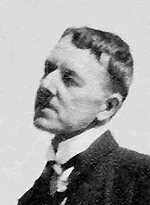 The strong parallels between Vietinghoff and Yourcenar, the irreconcilable polarities in the marriage of Jeanne and Conrad and the imagination floating in Yourcenar's fantasy were so basic and complex, that they could not be presented in a single volume, neither be transformed in a liberating way. The complexity of this partnership could only be lived by the couple or chosen as a central theme and modified in various aspects in Yourcenar’s works.
 The quiet Conrad held a different fascination for Marguerite Yourcenar; with him, she shared the "secret" attraction to homo-eroticism. At age 24, Conrad (1870-1957) had surely heard of the 1895 scandal and personal disaster of the writer Oscar Wilde (1854-1900). Later, André Gide (1969-1951), another internationally well-known writer, almost of the same age as Conrad, would assert his sexual orientation in society.
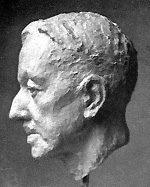 M. Yourcenar had met Jeanne only a few times, however she learned about her from her own father (Michel de Crayencour) – but how much? On the one hand, she has a much more vivid and realistic picture of her than of Conrad. On the other hand, he is an ideal projection figure because of the sketchy outlines Marguerite knew about him. She completes his character with her imagination and in he is useful in her novels.
Naturally, M.Y. cannot recall all details from her early years and fills some of these gaps with a mixture of psychologically credible reconstruction and drama, as well as self-reflection and poetry. Often she does not revive stories from the past and make them transparent to the reader, but - almost contrary - she uses the past’s lack of certainty as a framework in which she integrates her own actual feelings.
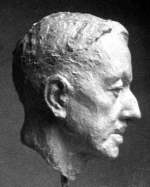 Through her additions, embroideries and creation, the characters of the novels became more and more independent from the original models. This gap becomes more obvious in other books which are also based on some of her memories of Jeanne and Conrad but do not give the true picture of the real couple.
It is true that we can find in “Anna, soror…” and in “Memoirs of Hadrian” genuine traces of Jeanne but hardly any of Conrad, whereas the figures in the novel “The Coup de Grace” have almost nothing to do with the real parents of Egon von Vietinghoff. “Alexis” (1927/1928) and “The New Eurydice” (1931) are based on young Marguerite’s impression of Jeanne and Conrad. In the novel “Coup de Grace” (1939) Conrad is depicted less faithfully than before, even the author uses his real name and presents some of the couple’s character traits partially correctly.
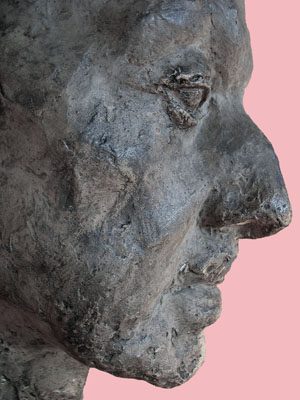 Yourcenar did somewhat alter names to make the historic persons a little more anonymous, for instance Alexis became "Axel", but she also swaped names, for instance, Conrad became "Alexis" or "Egon" (the names of his sons). Therefore she kept an inner connection to the history. The tendency to play with names already manifests in her pen-name which is an anagram built from the letters of her true family name: Crayencour became Yourcenar. Only the second "c" was ignored – she was not a pedant.
 She empathizes with individuals and understands the epochs with a broad knowledge and deep sensitivity. She opens space for imagination and free association. Homoerotic relationships are one of her noteworthy topics, in which she assimilates her own homosexuality and her feelings of love for homosexual men.
Conrad v. V. himself sublimated his life theme by reading pertinent literature and the Bible, in personal communications with a few friends and especially in his art of playing the piano like many sensitive artists. His wife Jeanne assimilated her complex and troubled life through internal processes and by writing her own books. Marguerite Yourcenar did it in her own way in her work.
Yourcenar was a master in covering her own tracks, in voluntarily confusing facts and in “hide-and-go-seek”. Even biographers fall for it and take the characteristics of the Vietinghoffs as described in her novels at face value. Therefore, we read many wrong "descriptions", especially about Conrad which are related to his profession and his biographical details as well as his preferences and behavior.
J. Savigneau wrote in her biography of M. Yourcenar: How much of this confusion is intentional? and Her real interest in her own life was only what gave her a reason for literary transformation.
M.Y. herself wrote:
Any literary work is created from a mixture of imagination, memory, and facts, from knowledge and information, which are acquired by talks or in books during the course of life, and from the chaff of our existence.
(M. Yourcenar, Epilog to Un Homme obscur (engl. An Obscure Man)
J. Savigneau wrote in her biography of M. Yourcenar: How much of this confusion is intentional? and Her real interest in her own life was only what gave her a reason for literary transformation.
M.Y. herself wrote:
Any literary work is created from a mixture of imagination, memory, and facts, from knowledge and information, which are acquired by talks or in books during the course of life, and from the chaff of our existence.
(M. Yourcenar, Epilog to Un Homme obscur (engl. An Obscure Man)
8 - Alexis
 In 1927, when writing her debut novel Alexis, published in 1929, she was probably more cautious yet and her impression of the few encounters with Conrad were still fresh; however, the novel's character was nearer to the real Conrad than in later works. Nevertheless, there are deviations from the real Conrad von Vietinghoff. Please, notice the "Remarks and Corrections" given below.
 Conrad von Vietinghoff had two sons, the future painter Egon and his junior Alexis. The latter was named after the Belgian Alexis Bricou, the father of Jeanne von Vietinghoff, the painter's mother. Without his knowledge, Conrad was used as the model for the character of "Alexis" in Marguerite Yourcenar's first novel Alexis ou le vain combat ("Alexis, Or The Treatise on a Futile Struggle", but the English title is just Alexis). It was published in 1929, three years after Jeanne (represented by "Monica") had already died and it was the year when Yourcenar's father died. Conrad survived 28 years longer.
In 1925/26, her father told her – as far as we know – about the marriage of Conrad and Jeanne; as a part of the story; he also told his daughter how much he admired and loved Jeanne. She passed away in 1926 and Marguerite visited her grave in Switzerland, in 1927, in a kind of pilgrimage to her idol (see her passionate poems to Jeanne at sub-chapter "Jeanne von Vietinghoff, the mother"). Then, the young Marguerite traveled further to Zurich and it is highly probable that she met the widower, Conrad. As she tackled writing Alexis on the second day in Zurich, still in the hotel, Conrad was the model and her visit the trigger for her first, though indirect, confession.
 In this novel without action, which is more a novella, the last descendant of a noble family reflects on his life, motifs, fears, inner conflicts, passions, and omissions. He does it in a long farewell letter to his wife, struggling for truth and confessing his hidden homosexuality. Sensitive, with subtle allusions and with an austere style, in the course of the novel the atmosphere of the agonizing inner conflict builds gradually. Marguerite Yourcenar remarked in the preface:
 in a bare, almost abstract language, at the same time careful and precise. The author tried here to generate the portrait of a voice.
Yet, in the novel Alexis, we cannot simply replace the name Alexis with Conrad and expect to understand the personality of Conrad von Vietinghoff. Essential traits are plausibly represented such as his hesitation, insecurity and scruples, Yourcenar herself states in the preface. The character is very credible, yet several of Conrad’s aspects are changed consciously or evolve into an independent literary persona.
In 2003, the centenary of Marguerite Yourcenar and Egon von Vietinghoff, the Centre International de Documentation Marguerite Yourcenar (CIDMY) at Brussels, successfully arranged performances of Alexis in a dramatized version by Ms. Michèle Goslar.
All that Marguerite Yourcenar knew about Conrad could have come from four sources:
1) From the side of the responsible and disciplined Jeanne, at best some remarks to the juvenile Marguerite, who only met her a few times.
2) Yourcenar herself reported that her father, Michel de Crayencour, told her something (or the entire story?) of the cohabitation of Conrad and Jeanne and of his great admiration of Jeanne.
3) She seems to have met the widower Conrad at age 24, alone at his flat in Zollikon, nearby Zurich, after her pilgrimage to Jeanne's grave in Switzerland.
4) Finally, she possessed enough intuition, fantasy and deductive intelligence to make assumptions from her observations.
1) From the side of the responsible and disciplined Jeanne, at best some remarks to the juvenile Marguerite, who only met her a few times.
2) Yourcenar herself reported that her father, Michel de Crayencour, told her something (or the entire story?) of the cohabitation of Conrad and Jeanne and of his great admiration of Jeanne.
3) She seems to have met the widower Conrad at age 24, alone at his flat in Zollikon, nearby Zurich, after her pilgrimage to Jeanne's grave in Switzerland.
4) Finally, she possessed enough intuition, fantasy and deductive intelligence to make assumptions from her observations.
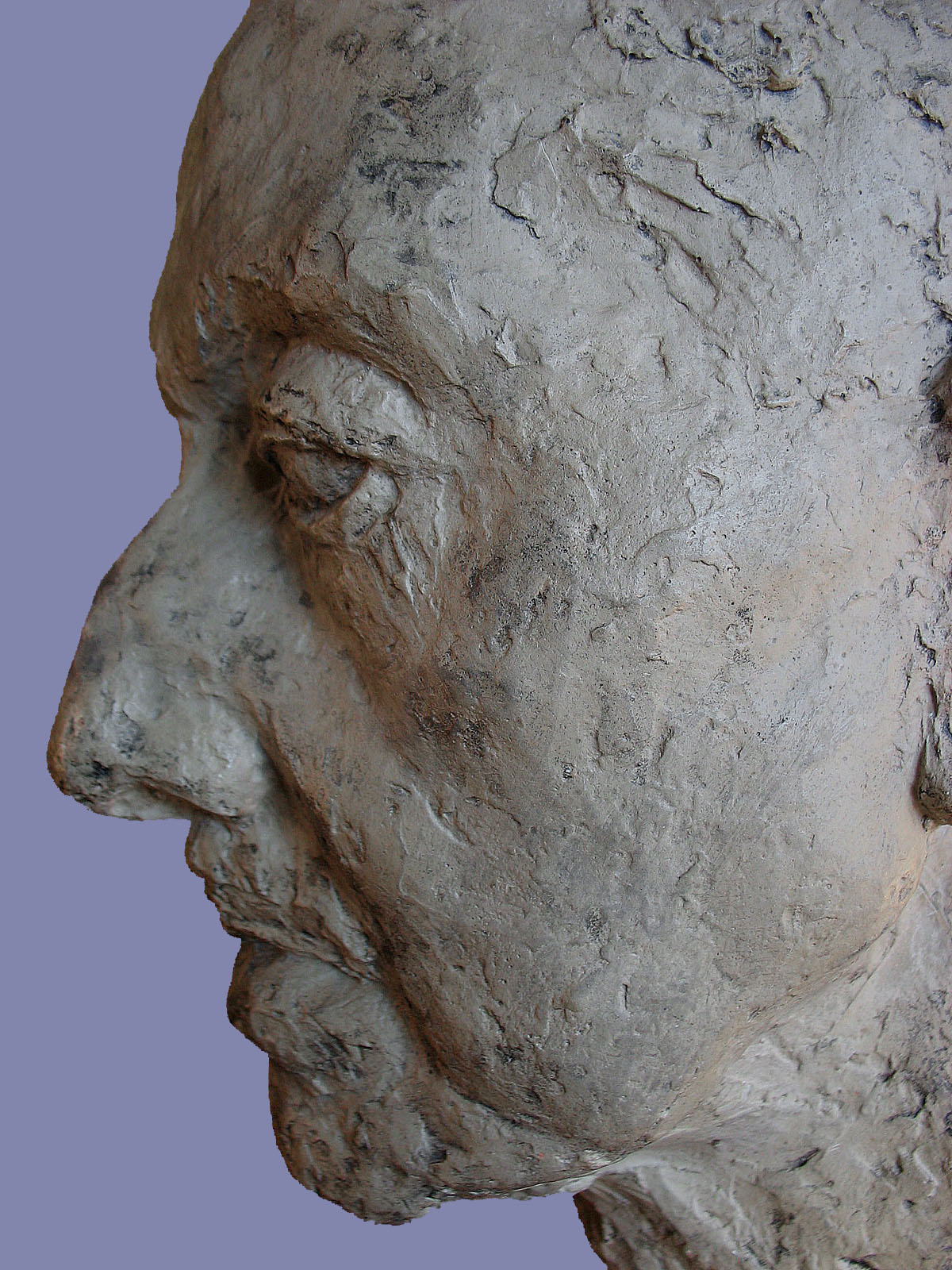 The single character "Alexis" in the novel and on stage is undoubtedly Conrad von Vietinghoff, whose character Yourcenar named after his second son. To confuse names is a simple method, often used by this author, in order to blur the outlines of reality. Anyway, the novel was published during the lifetime of Conrad, Egon and Alexis, whereas Jeanne von Vietinghoff, in the novel named "Monica", had already died three years before.
 Therefore, M.Y. evades the necessity to portray the biography of the historic Conrad correctly, and is free to depict her fictitious figure who expresses the author’s own emotions. She fills the void in her view of Conrad with her own feelings and ideas.
Simultaneously, the second eclogue of the Roman poet Virgil, which is named Alexis, was the force behind Yourcenar's first book. In Virgil's pastoral, Corydon courts the handsome youth Alexis. André Gide, another French writer and Nobel Prize laureate for Literature, borrowed this name in 1911 for a title of one of his works, which was only published in its entirety in 1924, just three years before Marguerite Yourcenar wrote her Alexis. In doing so, Gide triggered a scandal. Consciously creating such parallels, even the title of Yourcenar's Alexis, gave insiders enough hints on the world of her feelings. Gide’s Corydon includes Four Socratic dialogues whereas Yourcenar created her Alexis as a letter novel. In the past, the genre of the letter novel, similar to an intimate diary, was used to address erotic themes and taboos on which society kept silent.