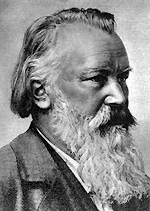
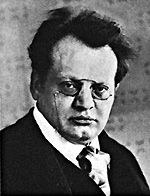
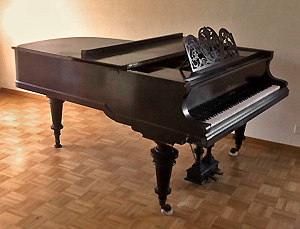
 After about 1925, there were only a few people who heard him sometimes playing privately. They said he was simply brilliant and absolutely incomparable when he played on his Blüthner grand piano, pieces by Bach, Mendelssohn, Schumann, Chopin, Brahms or both his contemporaries, two years his junior, Reger and Scriabin.
 Not one tone from his mellow touch upon the keys was ever registered, nor one time of his singing interpretation was ever recorded. The 30 years following his wife’s premature death, Conrad, shy and almost ascetic, lived alone in small flats – lost in philosophy, literature and the world of sounds. He was a pacifist, a strict opponent to animal testing, touchingly ready to help but somewhat clueless in managing his life. At 86 years old, he peacefully passed away in Zurich, almost destitute and in obscurity.
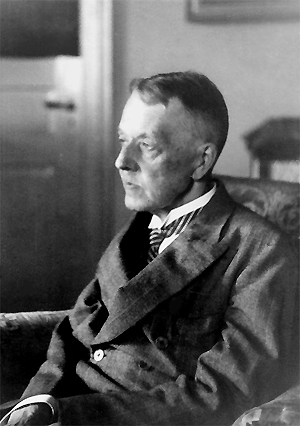 The Germans living in the Baltic region, especially the noble ones, had the reputation of being real originals. Their distance to the homeland, the changing authorities, their social status floating above that of the Latvian-Estonian population, and their economic independence may have contributed to it. And also the frequent marriages within the same families…
The eccentricities of some are material of unwritten novels. Despite a strange combination of "ignorance", education and a peculiar kind of intelligence, their thinking was positively open to the world, refined, generous, and self-confident.
They distinguished themselves by a liberal way of life, civil courage, a superior distance to everything that was common, whimsy, absent-mindedness, lack of closeness to life and realism, naiveté, cordiality, a story-telling genius, but also by melancholy, from which they knew to save themselves again by involuntary funniness and a humor heightened to self-irony.
The Livonian Germans are also marked by a special earnestness, sense of responsibility and exaggerated commitment. Much of this is also typical of Conrad and Egon von Vietinghoff.
 Conrad’s life is an illustration of the historical ending of an era and – because of his unconventional, individualistic way – also of the beginning of a new one.
 He promoted in his son the value of greater independence from social and family expectation as well as an uncompromising artistic self-determination.
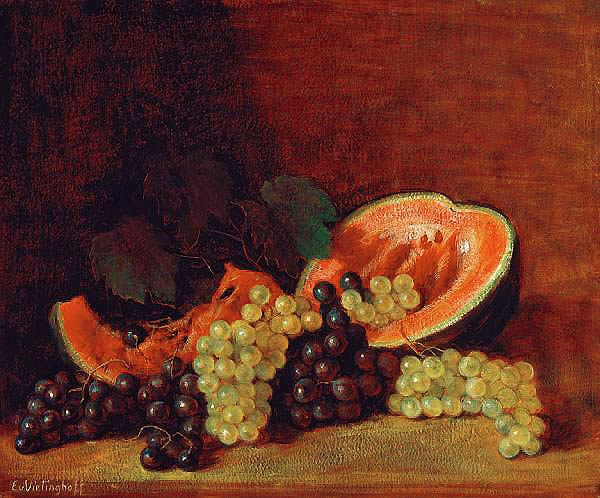 The painter Egon continued this radical change in the second generation: as a painter with his self developed technique and his autonomy to the zeitgeist, i.e. his craftsmanship and artistic style. Last but not least, he overcame the traditional family obligations by having four non-aristocratic marriages.
 Such unexpected artistic talents can blossom from the painful breaks with the past. Remarkable potentials emerged, enabling new creativity to flourish.
In the community of Conrad, Jeanne and Egon we find the classical trinity of music, literature and painting.
3 - Homages to Conrad
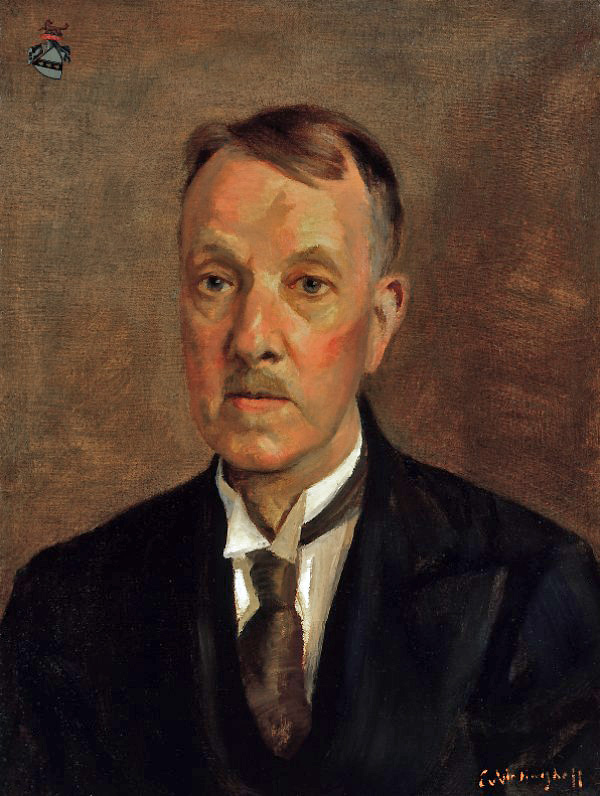 Article from his friend, pastor Ernst Merz, in Zolliker Bote from 1940, Dezember 27, on the occasion of his 70th birthday
The musician Conrad von Vietinghoff celebrates his 70th birthday in Zollikon on December 29 in quiet seclusion. After he studied at the well-known Baltic University in Dorpat, he broke away from the Baltic nobility to devote his life entirely to music and his fellow mankind. He studied musicology with a disciple of Brahms and devoted himself to playing piano. He has seldom performed in public, however he played most intimate and powerful performances for his friends and acquaintances.
Many families in Zollikon and Zurich know about his sublime and soulful playing, about his passionate interpretation and about his delicate and gentle touch. It is as if the piano sings under his hands; his playing comes from the heart and goes to the heart, so that the listener is deeply moved and shaken.
On his long, eventful pilgrimage through Europe (Latvia, Holland, Switzerland and France) with periods in [Leipzig, Berlin], Paris, Wiesbaden, Geneva and Zurich, Conrad von Vietinghoff always found like-minded souls who gathered in his artist residences which he maintained and managed with the well-known writer Jeanne de Vietinghoff, his wife at the time (who died prematurely).
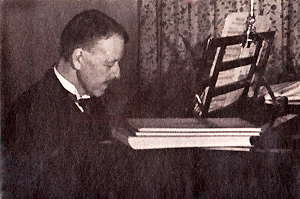 Anyone who visited and still visits him can be sure that Conrad von Vietinghoff. will introduce him to one of the eternal works of art by Bach, Beethoven, Chopin, Brahms or Reger and let him share in a higher world.
The fact that Vietinghoff accompanied the world-famous cellist Casals in Paris and still enjoys his friendship shows his skill and mastery of piano playing.
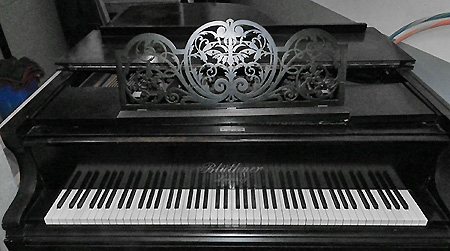 Many artists may shine in front of the audience by their technical virtuosity, but often the most important is missing, the soulfulness of the artwork. It is the personality that is of the utmost importance when presenting a musical work. Our jubilee combines both: he masters the technique and penetrates a work with humble empathy and with the spiritual and comprehensive understanding of his humanity. We have rarely listened to such a playing; art and life are not opposites for him, but form an inseparable unity. When he plays it is like listening to the proclamation of great love and freedom.
 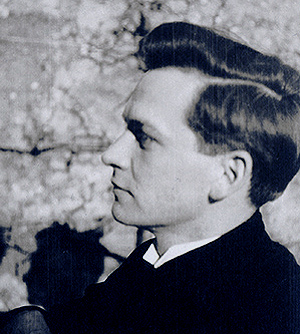 Many of his friends do not see him only as an artist, but also as an always helping and sincere philanthropist. How many received spiritual advice in his hermitage and left it comforted and consoled. All those who got to know him well will testify that while music fulfills his life, but everything of spirit and beauty also contribute to what makes life worthwhile. Not for nothing, in his earlier years, for decades, he was a friend of Madam Ott, a lady of spiritual importance and friend of the philosopher Nietzsche. She made him aware of the realm of invisible values, like a "Diotima" pointing out the higher world of ideas and spirits to him as music engrossed "Socrates".
 In addition to his love of music, he has acquired an comprehensive humanistic education. If he had not become a musician, today we would be celebrating him as a researcher in comparative linguistics. It is amazing how many languages he speaks. He is familiar with Greek, Latin, German, French, English, Italian, Norwegian, Latvian, Russian and Dutch, which he got to know during his travels and his whereabouts in various countries. It is a pity that this talent for languages did not benefit the general public, but only to a limited audience.
 Today, a large and unrecognized community is thinking with deep gratitude about this person, to whom any pride or outward appearance, any fame or ambition are unknown. He lived hidden and in seclusion all his life, being able to generously help and give to others.
What should we wish for him during these inhuman times which seem to destroy what is valuable in true culture? That peace and human dignity may come on earth again, those values for which Conrad von Vietinghoff has contributed so much enthusiastic and tirelessly, that would be his and our most ardent wish.
 For him personality and freedom are holy and untouchable. This made him, the former German-Baltic baron, a committed Swiss democrat. Far from the ideology of the master race, he is the personified goodness, and if he did not have thoughts for his son, he would have given away all his fortune as Francis of Assisi once did.
 Therefore he preached true humanity, peace and goodness wherever he could. He was always engaged in the harmony of individuals and nations, as he was an enemy of any war and any degradation of human beings, vivisection (animal testing) and all kinds of political and denominational delimitation.
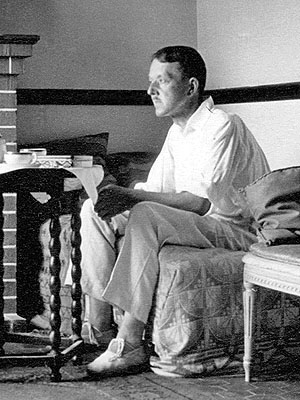 Homage to Conrad on the occasion of his 80th birthdays
(Zürcher Landbote, December 1950)
Since he seldom performed in public, only a few people know about his outstanding execution and his artistic perception to pour his soul into the works of Bach, Beethoven, Brahms, Chopin and Reger. When people with like-mindedness gathered within a common mood around him, then everybody was flabbergasted by the Grand Parlor's singing sounds.
Only a few people knew his superior manner in playing the piano and his perception of art as he very rarely appeared on stage in front of the public. He allowed his soul to breathe through the work of Bach, Beethoven, Brahms, Chopin, and Reger. When his artistic soul mates gathered in likemindedness at his home, his grand piano resounded and sang in such way that everyone was moved tremendously to their core.
His keystrokes are sweet and tender like himself but when his passion is ignited he is a commander of chords and sounds when sitting at the piano as if he were directing an entire orchestra in order to channel his emotions into the track of eternal laws. Never before had I listened to such a unity of greatest tenderness and mighty passion; never such musical insights and such an overcoming of all grief, immersed into celestial worlds.
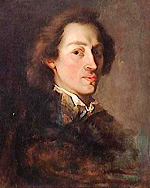
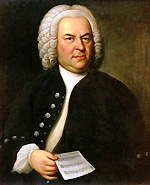 Conrad von Vietinghoff did not cultivate modern music but rather the high tradition of classical music. He never compared one of the mighty composers against another – though Bach, Brahms, Reger, and Chopin were especially near to his heart.
 Due to his exceptional level of sensitivity he becomes immersed in the heart of a masterpiece and is able to interpret and perform it with his encompassing heart; with the beauty he arduously acquired from his inner struggles and difficult times.
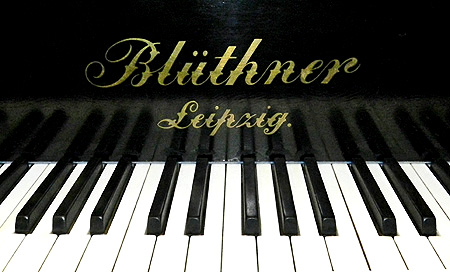 The picture of this man would not be complete without remembering his many connections to high esteem people in several European cities during different periods of his life. The love for mankind is deeply rooted in his soul. Therefore, he exemplifies true humanity, peace and goodness where ever he can. He is always engaged in the harmony of individuals and between nations as he is an opponent of any war, humiliation, vivisection [animal testing] and any political or denominational segregation. He is strictly opposed to the violation in any shape and form of the Reverence for Life [a philosophical term of his contemporary Albert Schweitzer], and I never saw him so outraged as when faced with a violation of human dignity.
 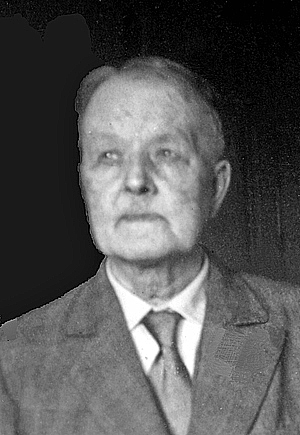 He was a passionate opponent to those who violate the reverence for life, and I never saw him so outraged as when faced with the violation of human dignity. Personality and freedom were sacred to him; this is the reason why the former Baltic-German baron became a convinced democrat and Swiss citizen.
Far from any aspiration be a member of the ideological master race, he was goodness itself, and if he had not thought of his son, he would have given away all his fortune, in the manner of Saint Francis of Assisi.
Rarely in my life, have I met a man who was so deeply connected with the spiritual and invisible realms. I did not hear only thoughts about the "hereafter" but rather about a developed life in the heavenly world with a mighty longing to overcome all that is too human, the small earthly globe and the everyday world overestimating itself.
Music – Love – Eternity are the elements of life in Conrad von Vietinghoff's spiritual home. These three powers bring vibrancy into a man's soul, transforming him to reach the condition we call bliss. As an artist he can transmit the huge waves of sounds of the cosmos or hear with a new sense of heightened sensitivity; the harmony of the spheres from the realm of suns, planets, spirit and angles. Obviously the life of hypersensitive people is not easy in times of world wars, in the midst of revolutions or when surrounded by a hard technical mentality. Despite this almost infernal development in our epoch, he firmly kept the spiritual primacy which he won during the course of his life.
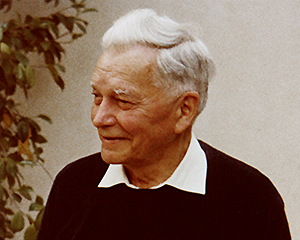 "Mysticism" would be the only adequate term to depict his religiosity and what he thought and felt, what he lived and suffered for. However, it is not the medieval ascetic mysticism but a mysticism of a positive life attitude, a mysticism of love in which all opposites join and unite in an infinite harmony.
He connects the earthly life with the infinity, the human passions with the heavenly realm as in an immense symphony done by composers.
It was and still is his conviction that the truly enduring art works emerge from love and passion. He is a man of heart, subtle feelings and intuition who is searching to understand, to donate and to serve. The shining theme of his life, which once a friend wrote to him was: He was born in order to love.
Remark: Due to his empathy and his trusting nature C.v.V. lost a part of his fortune through gifts and sureties to “beggars and scammers”. Therefore, his son, the painter, had to place his father under guardianship.
4 - Memories from his doctor
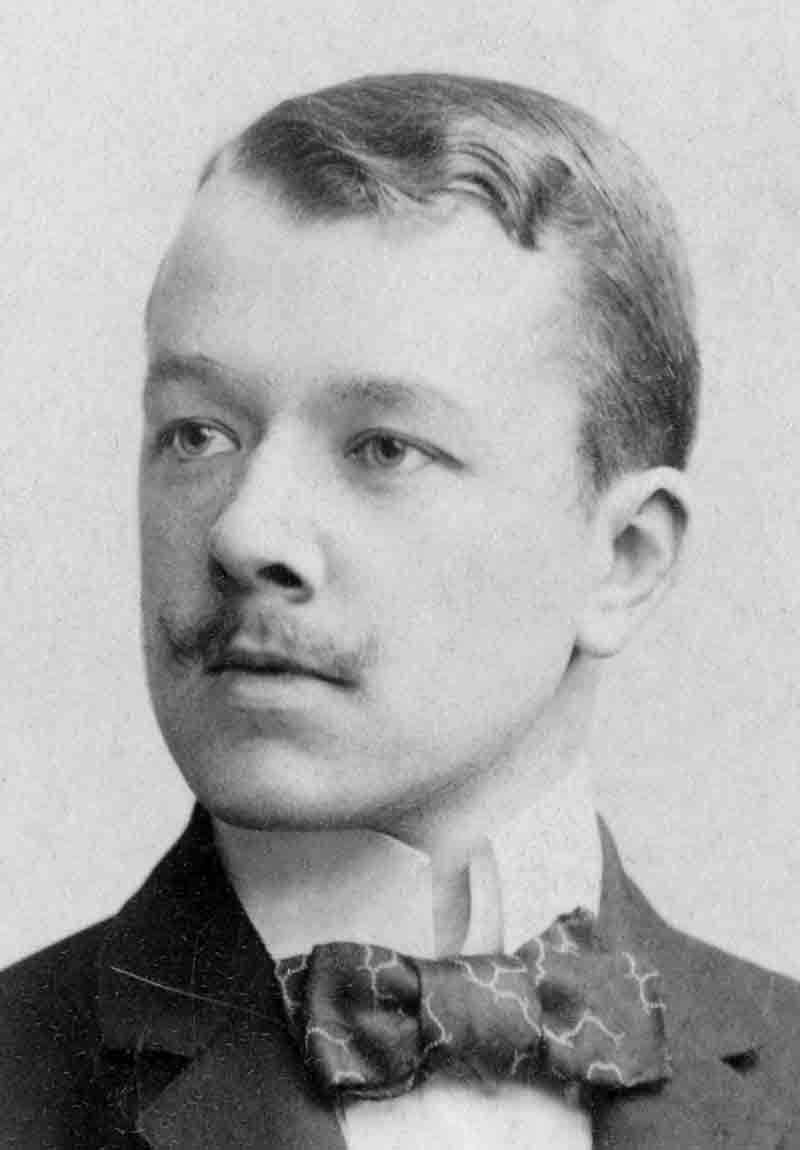 Excerpt from two letters from his doctor, Dr. Otto Alb in Zollikon (Zurich, Switzerland), to Madame Michèle Goslar in Brussels (Translated from French).
Madame,
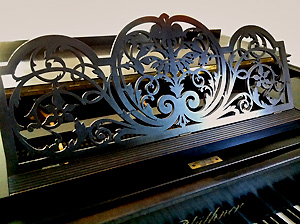
I treated the Baron Conrad von Vietinghoff as his family doctor [1] over the course of his last six years, precisely from 1951, February 11 until 1957, January 12, his day of death at the age of 86. At that time he lived in Zollikon, a suburb of Zurich, in a small two-room apartment with a nice view of the lake. Its character was old-fashioned luxury, somewhat similar to the style of Vuillard, full of carpets and old, obviously neglected furniture, including the grand piano and a lyre shaped music book cabinet stuffed with yellowed books of music, but not of his own composition – this was never spoken of [2].
… It seems that Conrad von Vietinghoff never gave a concert in public [3] (I do not remember having seen newspaper cuttings in his flat in Zollikon); however, he did so frequently on the occasion of (private) evening receptions of the high society, in Zurich as well. I myself participated on similar occasions, the last time in Küsnacht where Conrad von Vietinghoff's eightieth birthday was celebrated and we played together excerpts of the violin concerto of Max Reger (C.v.V. had a preference for Brahms and Reger among others). Even in old age, the baron proved to be a remarkable and experienced pianist – even more so as a true musician who gently and deeply reached the core of a piece of music.
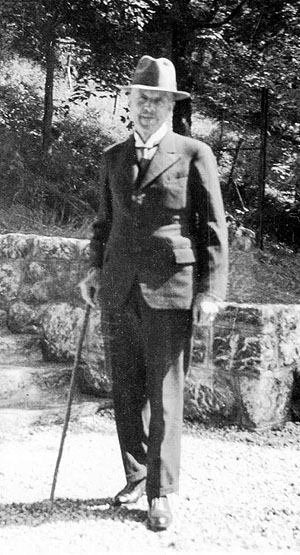 Physically, the baron was tall, skinny, a little gaunt, but in good condition for his age, with a lively spirit, intact memory and an often sarcastic sense of humor. It is true, that with his falsetto voice, indeed he gave a somewhat feminine impression of great sensibility and fineness. He loved to emphasize his infirmities of old age. He rarely went out, remained more and more in his bed and provided himself with several blankets and a fur hat at the slightest change of weather, even in summertime. For our medical visits, he offered tea and small pastries. He said: Doctor, please do not come next time; it is too strenuous for you. And when I announced my absence due to a holiday: That is such a pity; I will surely die during that time.
I knew Mister von Vietinghoff solely in the last years of his life but I never forgot his gentle and discreet nature…
(Letter from October 3, 1989)
--------------------------------------------------------------
Madame,
I was surprised and touched by the confessions of "Alexis". In my opinion, C.v.V. is astonishingly present – even with his pinch of insincerity as homophiles like to do. ...
As far as I remember, C.v.V. secretly had a similar view to the German poet Hermann Hesse who thought that "psychology is a weakness of our time".
The Coup de Grace seems to me to have less value then the admirable Alexis and is not so important for the understanding of C.v.V. – particularly if one remembers that he never saw his homeland in Estonia [4] again after his departure. [5]
… His last address was Farenweg 16 in Zurich-Enge [6], where he remained in the care of a young male nurse from 1956, where I furthermore made my visits and where he peacefully passed away due to a great arteriosclerotic weakness. (Parts of the letter from 1989, November 26)
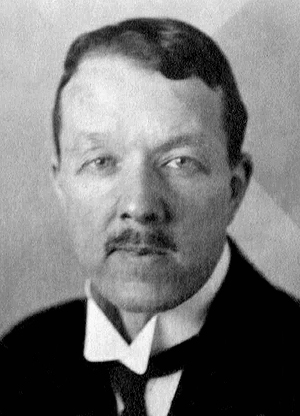 Remarks
1) Dr. Alb was temporarily the doctor of Conrad, Egon and Alexander von Vietinghoff
2) The doctor was correct: Conrad never composed. That he would be a modern composer is a literary invention of Marguerite Yourcenar.
3) This memory is correct, apart from a charity concert in Fribourg (Switzerland), together with a cellist in 1923.
4) In this point the doctor's knowledge is not completely precise: Conrad's homeland was that part of the former Livonia which actually belongs to Latvia. However, he studied in Dorpat (Tartu), which is still a university town, today in Estonia.
5) It is certain that he visited several times (how many?) his parents in his Baltic homeland after he moved his studies from Dorpat (Tartu) to Leipzig and Berlin. It is verified as well that he visited his parental home after his studies another three times: on the occasion of his engagement in 1902, and with his children in 1904 and 1906. After that perhaps once more, but surely not later than 1913.
6) The Farenweg is not located in Zurich-Enge but five minutes drive distance from the domicile of his son Egon in the quarter "Wollishofen".
5 - Memories from Liane, his daughter-in-law
 After his death, when we packed up his household, I found a box with the inscription "Strings too short for use."
 Comment:
Conrad grew up in a great manor where many things were either produced by themselves or were only be procured by horse carriage in far off provincial towns or even in the distant capital. In addition, he experienced the years of crisis due to the Russian Revolution, World War I and II, the great inflation and finally lost a part of his fortune due to his naivety and generosity. Even though he did not really need to economize during his first 60 years, he was always conscious that even small things had their value and could be very useful. To throw something away was a "pity" and therefore an inner overcoming.
In 1950, Conrad moved to a small private rest home and Miss E. of the high society in Zurich helped him to pack. On this occasion, she pulled a black and a pink lady's garter from a drawer. He was already 80 years old and certainly never received lady visitors, unless of devotees of his piano playing and his daughters-in-law. In view of his ascetic way of life, quite astounded by this discovery, she dumbfounded held these two pieces out towards him with inquiring eyes. 'The peddler did not have anything else', was his embarrassed and helpless answer.