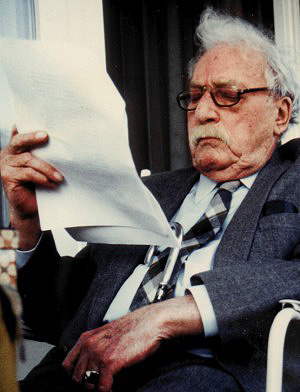
 Due to his technical expertise, he was occasionally asked to restore old paintings and icons or to teach young painters. Good-naturedly, but not always enthusiastically, he accepted such tasks even when they kept him from his own creative work. Between 1946 and the 1980's, he had ten private students: patiently he shared his knowledge with them and at the same time honed his own didactic methods. His tutelage also benefited the clarity of his manuscripts on painting techniques and painting philosophy on which he worked for decades. His last three students even helped him to complete the manuscripts.
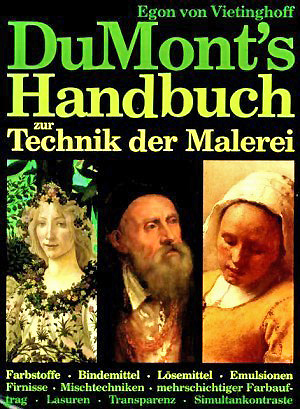
  After almost 50 years(!) of note-taking and correcting, the big day came in 1981: the manuscript was completed. Its second part appeared in 1983 in the renowned publishing house DuMont under the title Handbuch zur Technik der Malerei, i.e. Handbook of painting technique (available in German only). It is the sum total of his unique working experience and his many decades of experimentation.
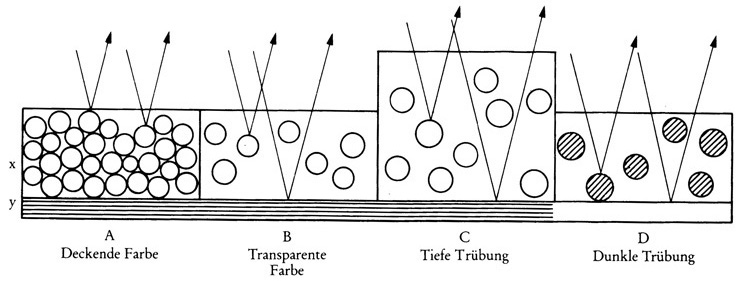
  Here, he defined a long neglected color characteristic, probably for the first time: the transparency of color.
 Thus, he again made available the lost treasure of the traditional oil-resin multilayer technique (which is a specific European cultural heritage) to generations of subsequent painters.
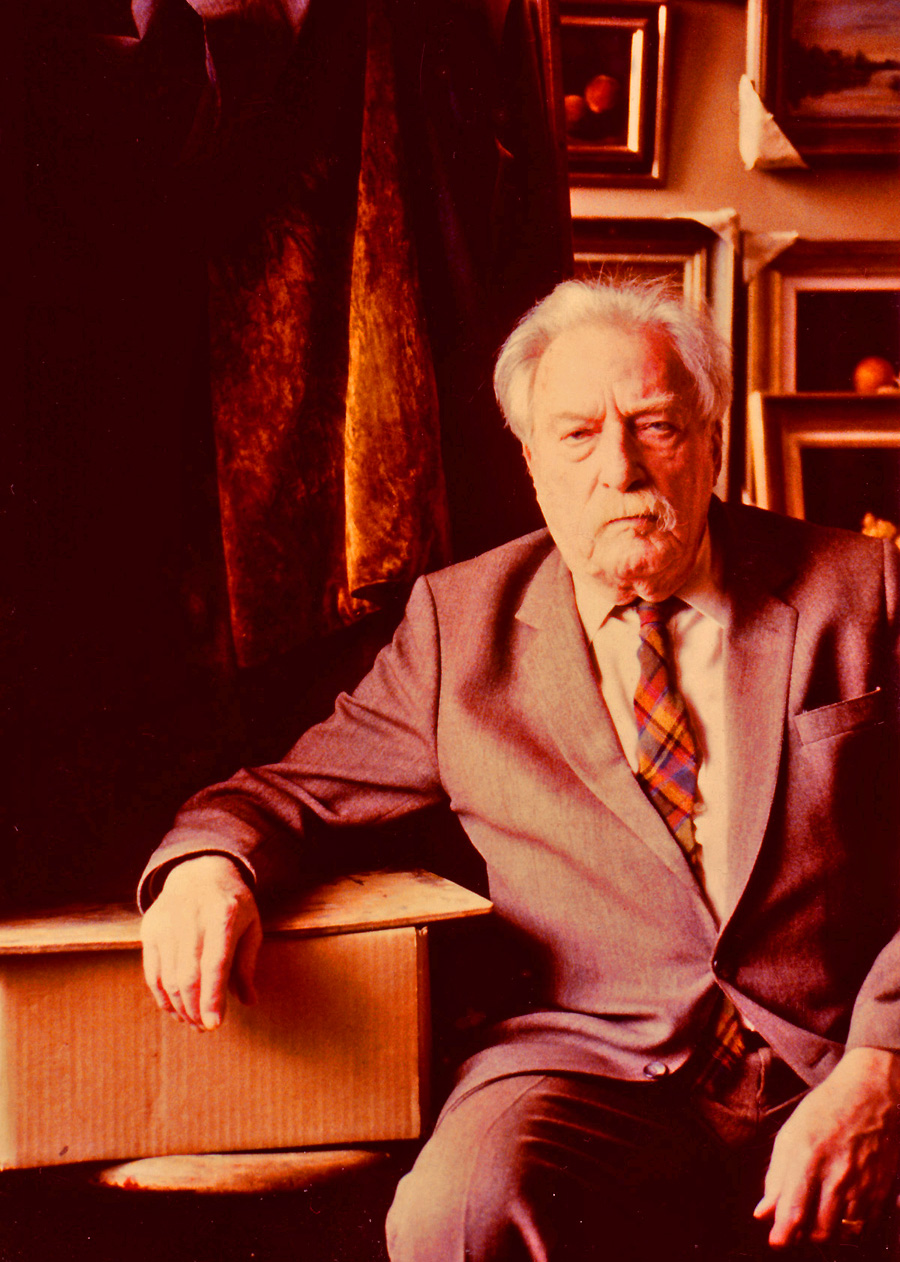 The first part of his manuscript Das Wesen der bildenden Kunst (The Nature of Visual Arts, in German only), has a philosophical message; it clarifies art terminology, uncovers misunderstandings and explains the nature of pictorial art. Vietinghoff separately defines intuition, fantasy and imagination, as well as decorative art and kitsch. He contrasts naturalism to the resemblance to nature and was strongly critical in his analysis of both naturalistic and abstract painting.
His way derived from spontaneous transcendental experiences and led him to his Transcendental Painting concept by the meditative way of looking postulated in his School of Pure Vision (please look at this chapters). This latter one is created neither by painstakingly accurate object descriptions nor by intellectual ideas or political or psychological motivations, but on the sole basis of visual, sensual perception presupposing a radical separation from any knowledge and a suppression of conscious thoughts.
Thus, the painting shows an interiorly realized transformation of the rhythm of color, a spectacle of light and shadow opening up a transcendent world. By doing so, he followed his artistic models (the Old Masters) in who's best works he recognized his own transcendental experiences and insights from their intuitive and inspired brushwork-- irrespective of their subjects.
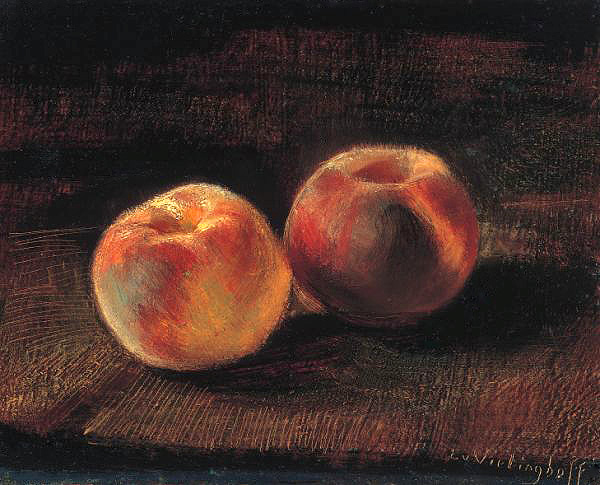 This manuscript is published only on the German Internet homepage of the Egon von Vietinghoff Foundation under the heading Philosophy / The Nature of Visual Arts. His experiences as a painting mystic provided him a transcendental standard which is timeless, expounded in his philosophy of a pure painting (see chapter Vietinghoff – the mystic and his contemporaries).
One can consider him as a painting mystic who meditatively penetrated the outer appearance with his sense organs, i.e. as a painter with his eyes, in order to comprehend their essence. This painting solely emerges from visual impression, only using color to be expressed. Egon von Vietinghoff was not interested in the categories of "old" and "new", historical or progressive, but in the capacity of an artist to be visually deeply moved due to a metaphysical experience. This refers to the purely intuitive imagination, focused solely on color play, and to the skilful transformation on the canvas. Thus, he searched as far as possible for a third view whose criteria were not bound by time. Yet, as a humble men and absorbed by his work as a painter and author never claiming himself to be a mystic.
 Since the nineteen sixties, the interactions of theoretical knowledge and technical know-how showed an increasing effect. Every-day life in the studio brought practical and meditative experiences leading to the differentiation of former definitions while the philosophical reflections in their turn were tested in the painting process.
This synergetic process accelerated the way he was painting and concentrated the artistic content of his works: he painted more and better. And he had financial successes which in their turn lent wings to his creativity.
 Occasional exhibitions in various towns of Switzerland and Southern Germany, once more in Paris and once in New York brought him personal but not official recognition.
 At best, the name Egon von Vietinghoff is mentioned in short, incorrect compulsory notes in painter's lexicons. He was neither supported nor officially exhibited (though he would have the right to do so according to the bylaws).
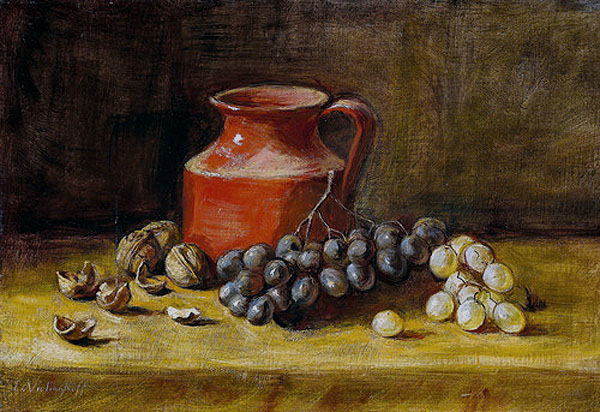 His requests were either refused or ignored. Semi-publicly accessible pictures hung in several restaurants and hotels; all the other ones were (and still are) privately owned. But in spite of all the attacks, he was gradually able to live from the sales of his paintings because he received an increasing number of word-of-mouth recommendations from private art lovers. Often he sold his works directly from his studio, sometimes right from the easel although not completely dry yet. Consequently he became less dependent on commercial galleries.
 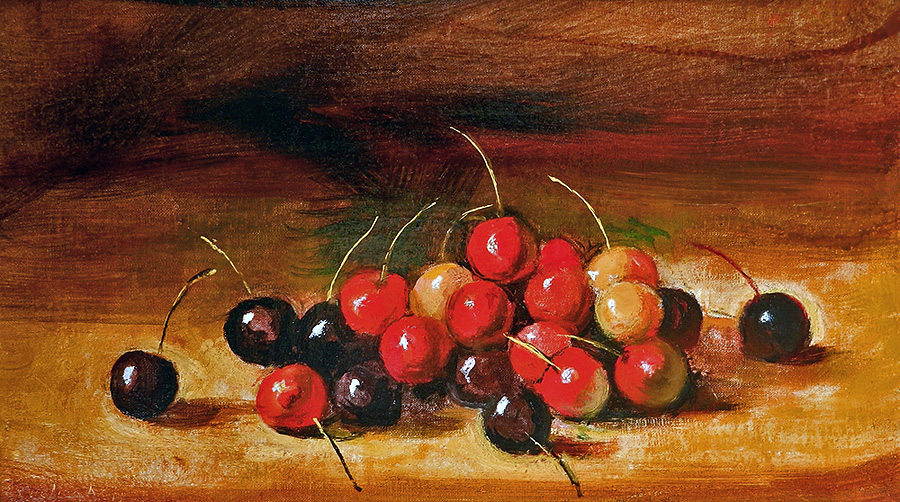 Taking into account his demands, he realized long ago that he had to produce his own colors, binders and his own base coats in order to obtain the required quality and the desired effect. The industrial products offered on the market were not suitable for his brushwork.
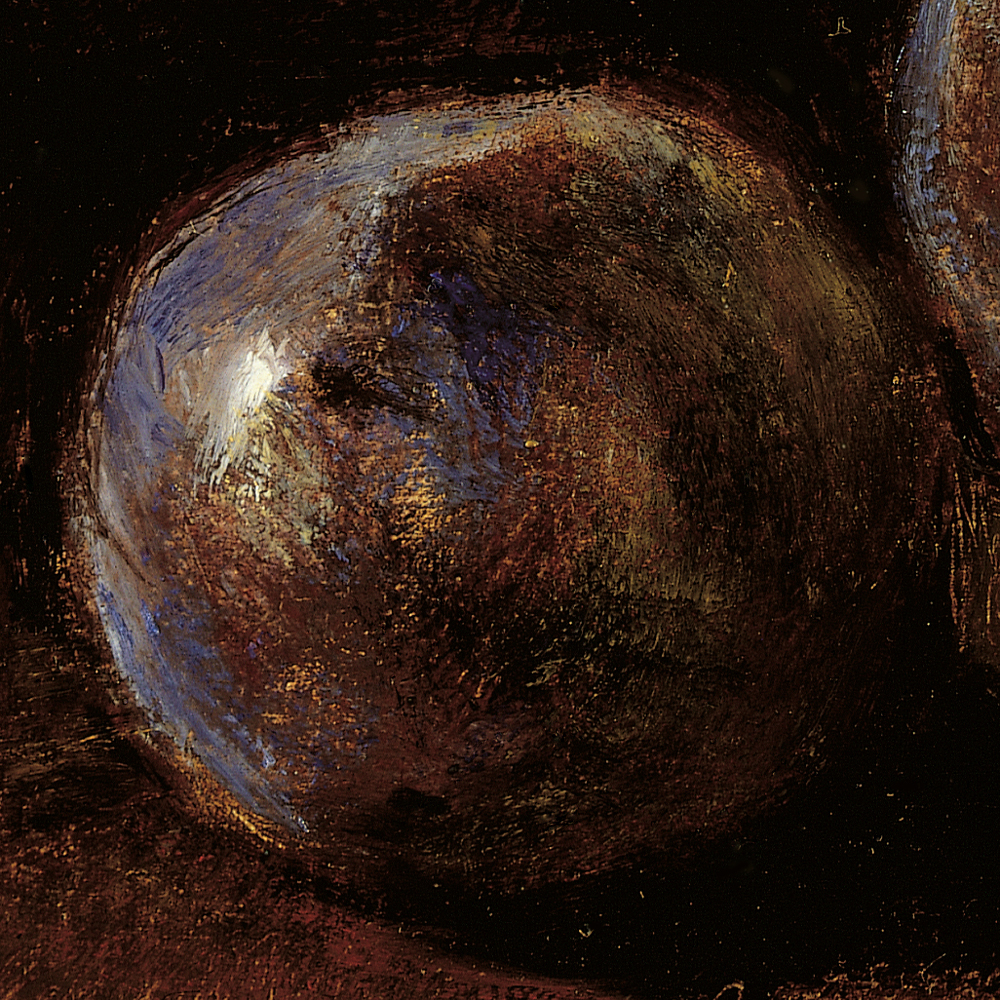
 His pictures, fascinating due to their unmistakable warmth, natural freshness and genuine luminosity, were created by him at every stage and by the use of materials which were the most pure and natural available.
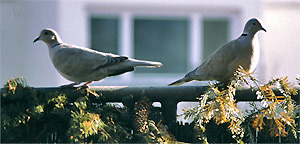 Although he spent at least 50% of his energy on manual preparations, experience and virtuosity allowed him in his most creative years (1964-1974) to realize a performance of an average of 75 pictures per year! And this including the purchase of fruit and materials, as well as color production, writing manuscripts, hobbies, friend's visits, and vacation. He always impressed through his enormous intensity, even if completely engrossed in reading a book, when speaking with the birds on the balcony or while pondering the daily tasks during a spaghetti dinner.
  After mastering his painting technique, Vietinghoff created three quarters of his opus during the second half of his life. At age 86, he made a conscious decision to lay down his paintbrush after nearly 70 years of artistic activity. He would then spend another five years at home in astonishingly good health – and this despite the fact that for some 75 years he had smoked between 10 and 50 cigarettes per day and that most of them were without a filter!
 His advanced age even let him see some of the fruits of his life work: in 1989, the establishment of the Egon von Vietinghoff Foundation (see this chapter); in 1990, the publication of the excellent catalogue of pictures owned by the Foundation, which he paid out of his own pocket; and in 1991, the publication of the 2nd edition of his Handbuch der Technik der Malerei (Handbook of painting technique).
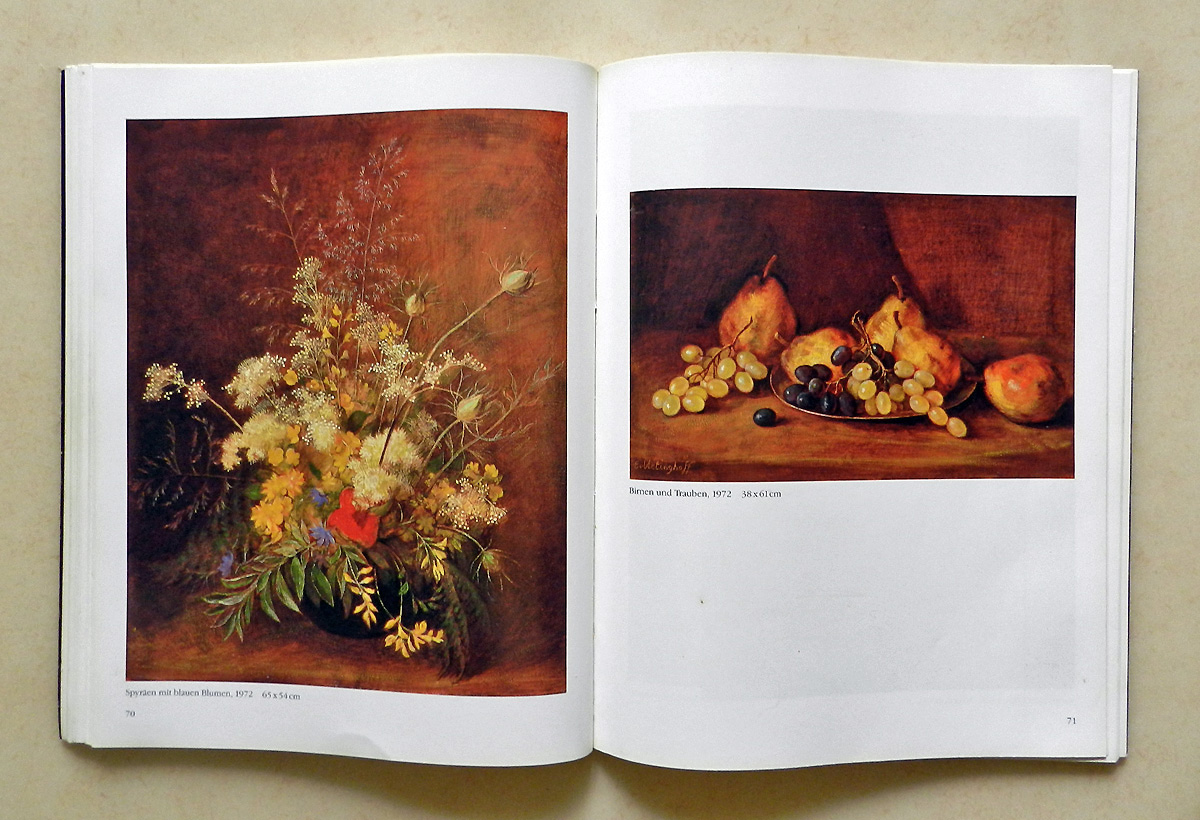 At his death a few months prior to his 92nd birthday, he left a life-work of 2.750 paintings – witnesses of a painting culture believed to be lost, based on a specific European culture heritage, works of timeless value.
  In his obituary notice we read:
Egon von Vietinghoff has left this world, through his works he continues to live.